The TikTok Fashion Impact: What the Industry Gained, and What It Gave Up

The TikTok Fashion Impact: What the Industry Gained, and What It Gave Up
Fashion has always moved in cycles but TikTok didn't just speed up those cycles, it fundamentally rewired who gets to start them. The platform's influence on fashion is now deep enough that designers openly engineer runway moments for the For You Page, luxury brands have hired TikTok-native creative directors, and a single 60-second video can send a previously obscure label's hashtag to 123 million views in under a month. That last figure comes from Coperni's now-famous spray-paint dress moment at Paris Fashion Week, when Bella Hadid stood at the center of a runway and had a garment literally constructed on her body. The clip was practically built for TikTok, and the numbers confirmed it.
Supporters and critics of that shift have drawn opposite conclusions from the same evidence, and the debate over TikTok's net effect on fashion has yet to produce anything close to agreement.
How TikTok Rewired the Trend Cycle
Fashion trends once had a recognizable lifespan. Something emerged on a runway, filtered into editorial, hit department stores six months later, and eventually trickled down to fast-fashion retailers a process that could take a year or more. Even the Instagram era, which compressed that timeline considerably, still operated on a cycle measured in seasons. TikTok has collapsed that cycle to something closer to weeks, with micro-trends rising and fading before a traditional retailer could even place an order.
According to FashionUnited, trend cycles that once lasted years or even an entire decade now rarely survive six months, and among Gen Z consumers, that's being generous. The platform's algorithm doesn't care about seasonality. It surfaces content based on engagement signals, which means a niche aesthetic can go from a few thousand views to a cultural moment overnight, with no fashion calendar involvement whatsoever. Cottagecore didn't get a runway debut before it became a genuine movement. Neither did gorpcore, mob wife aesthetic, or the brief but intense reign of the "clean girl" look.
The structural problem this creates for brands is real. Traditional fashion houses build collections 12 to 18 months in advance. A microtrend that peaks and burns out in six weeks can't be chased through conventional production pipelines only through fast fashion, which is exactly the industry segment that has benefited most from TikTok's acceleration. Shein, in particular, has engineered its entire supply chain around the platform's trend velocity, reportedly moving from design to product listing in as little as three days a pace that resembles content production far more than anything traditionally associated with apparel manufacturing.
The Runway Goes Viral By Design
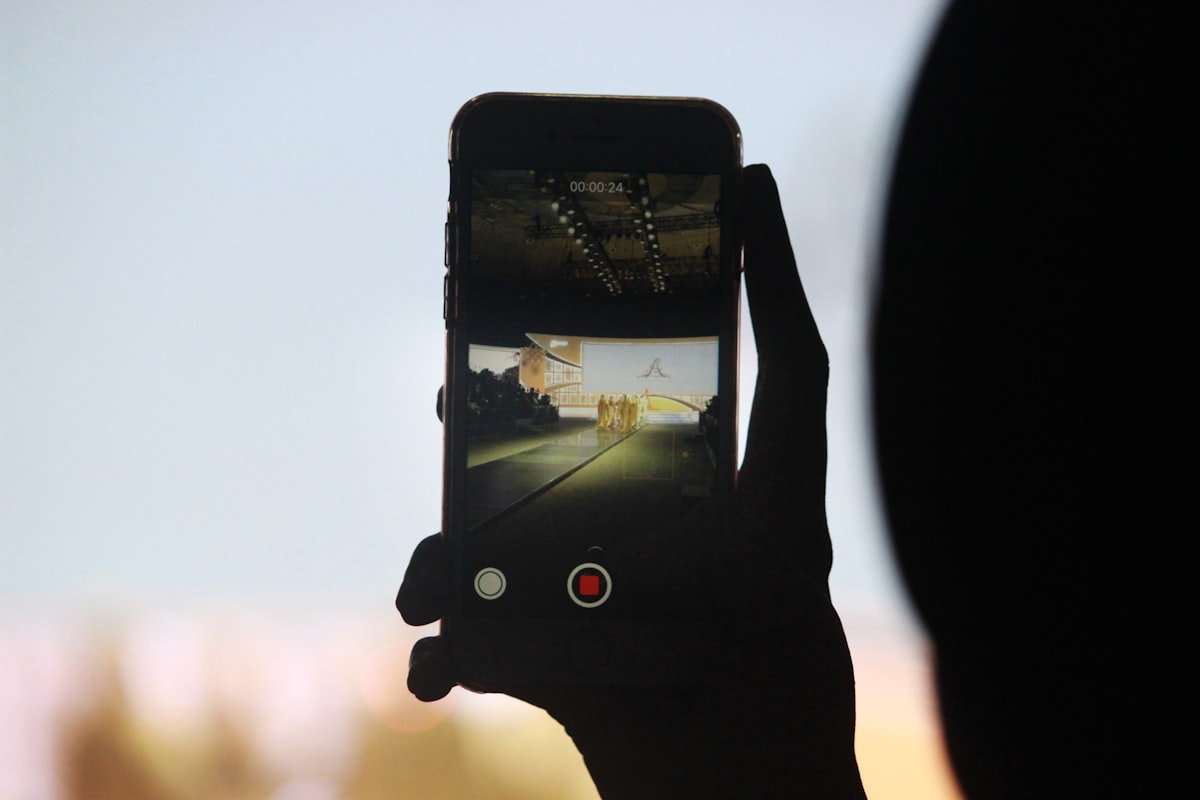
Coperni's spray-painted dress was no accident. Neither was Anok Yai closing Mugler's spring 2024 show trailing sheer veils through strobe lights, a sequence that looked extraordinary in person but was clearly composed for the vertical video frame. As Elle noted in its coverage of how TikTok reshaped runway culture, designers began engineering moments specifically for the For You Page once it became clear that a single viral clip could outperform a full season's worth of traditional press coverage.
Smaller labels figured this out faster than the conglomerates. Copenhagen-based label (di)vision staged a show where a model rose from a dining table, sending glasses flying and revealing that the wine-stained tablecloth was actually the train of her dress. The clip cut through fashion month noise in a way that a conventional lookbook never could have and it did so on a fraction of the budget that a traditional campaign would have required.
For decades, breaking into fashion's awareness required either a massive marketing budget or a relationship with the right editors. TikTok replaced that gatekeeping structure with an algorithm that surfaces compelling content regardless of origin though it rewards speed and spectacle more reliably than craft or nuance. Independent designers who couldn't afford a PR agency built followings in the hundreds of thousands by simply showing their work the sketchbook, the draping process, the fitting room disasters. Tanner Fletcher in New York and Sinéad O'Dwyer in London are examples of designers who built genuine audiences this way before traditional industry recognition followed.
The algorithm favors certain content over others. Posts that generate fast engagement shock, humor, transformation get amplified, while slow, considered work gets buried. A designer whose aesthetic requires context to appreciate is at a real disadvantage on a platform where most viewers decide whether to keep scrolling within the first few seconds.
What #TikTokMadeMeBuyIt Actually Did to Retail
#TikTokMadeMeBuyIt has accumulated billions of views, and it reflects a documented commercial phenomenon rather than just internet humor. TikTok Shop, which launched in the US in late 2023, integrated purchasing directly into the video feed, collapsing the distance between discovery and transaction to essentially zero. Fashion brands that had spent years trying to shorten the path from inspiration to purchase suddenly had a platform that did it for them.
The sales numbers have been significant enough that major retailers restructured their influencer strategies around TikTok specifically. A subtler shift happened below the brand level. Individual creators some with relatively modest followings in the 50,000 to 200,000 range found they could drive more direct sales than macro-influencers with millions of followers on Instagram, because TikTok's audience skews toward action rather than aspiration. A creator showing exactly how a blazer fits on a non-model body, in natural lighting, with honest commentary about the fabric, converts at a rate that a glossy campaign photo simply doesn't.
Reliable aggregated data on conversion rates broken down by creator size and platform is hard to come by the figures that circulate tend to come from brands with obvious promotional incentives, and independent audits of TikTok Shop's actual retail impact are still sparse. Retail trade reporting nonetheless makes clear that the platform has become too significant to ignore, even for brands that remain ambivalent about it.
Dupe Culture and the Sustainability Problem Nobody Wants to Fully Reckon With
Knockoff culture has existed as long as luxury goods have, but TikTok industrialized it in a way that has genuinely rattled high-end brands. The "dupe" search format, where creators compare an expensive item to a cheaper alternative and declare the cheaper one acceptable or even superior, has become one of the platform's most reliable engagement formats. Luxury brands that built their value propositions on exclusivity and aspiration are now regularly subjected to public side-by-side comparisons with $30 Shein alternatives, and the comment sections are not always kind to the originals.
TikTok's acceleration of microtrends means more production, more consumption, and more waste and the platform's most commercially successful fashion content tends to push volume purchasing rather than considered buying. "Haul" videos, in which creators unbox and try on large quantities of clothing at once, remain enormously popular despite growing cultural awareness of fast fashion's environmental costs. The tension between the platform's aesthetic of abundance and any serious sustainability commitment is one that the fashion industry has mostly chosen to paper over with capsule collections and recycled-polyester PR rather than address structurally.
The "slow fashion" and "no-buy" communities on TikTok are real and have built genuine audiences, but they exist in a different algorithmic pocket than the haul content occasionally surfaced to users who already seek them out, rarely pushed to the broader FYP in the way that high-velocity consumption content is. Restraint is a harder sell than a pile of new clothes, and a platform whose economic model is built on engagement and in-app commerce will consistently push content that reflects that priority over content that questions it.
Models, Scouts, and the Shifting Power Structure
Modeling agencies have begun scouting talent directly from TikTok, according to Vogue a practice that would have seemed absurd ten years ago but now reflects straightforward business logic: if a person already has 800,000 engaged followers, they arrive with an audience built in. Traditional modeling scouts spent decades haunting malls and high school hallways. Some of that work now happens from a desk, with a search tab open.
This has opened doors for faces and body types that conventional agency standards would have filtered out. It has also created a new kind of pressure the expectation that a model or creative maintain a content output that functions more like a media job than a modeling career. The line between "model" and "content creator" has blurred to the point where casting directors, agents, and brand strategists argue it's no longer a meaningful distinction for anyone under 30 working in fashion.
After the Ban Scare: What TikTok's Uncertain Future Means for Fashion
The US legislative push to force a TikTok sale or ban in 2024 sent a visible tremor through the fashion industry, precisely because the platform's centrality had become so total that the prospect of losing it felt like losing a primary distribution channel. Brands scrambled to shore up their Instagram Reels and YouTube Shorts presence as backup, and the results made clear that much of the audience behavior TikTok cultivated is at least partially platform-specific. The same content posted to Reels doesn't always perform the same way, because the algorithmic logic is different and the user intent is different.
What TikTok has done to fashion over the past five years is substantial enough that even a forced migration to competing platforms wouldn't simply reset the industry to pre-TikTok conditions. The compressed trend cycle is now a structural feature of how consumers relate to clothing, not a platform-dependent behavior that disappears with the app. The expectation of runway-to-viral moments, the dupe culture, the creator-as-retailer model these patterns have been absorbed into the industry's operating assumptions regardless of what happens to the platform itself.
TikTok handed fashion speed and reach, but also a new gatekeeping class 24-year-olds with ring lights rather than 55-year-olds with corner offices. Whether that trade was worth it depends largely on where a person sits in the industry, since a fast-fashion supply chain executive and a mid-sized independent label navigating short trend cycles are operating under very different pressures and incentives.