Baddie Room Decor: How to Build a Space That Actually Looks the Part

Baddie Room Decor: How to Build a Space That Actually Looks the Part
The baddie aesthetic has always been about one thing projecting confidence so convincingly that the room does half the work before you even walk in. Baddie room decor takes that same energy off the body and onto the walls, the furniture, and every surface in between. Get it right and the space feels intentional, charged, a little glamorous. Get it wrong and you're left with a room that looks like someone just bought LED strip lights without understanding how to integrate them properly.
There's a meaningful difference between those two outcomes, and it mostly comes down to understanding what the aesthetic is actually built on.
Where the Baddie Aesthetic Comes From
The term "baddie" a confident, stylish, attractive woman who projects self-assurance rather than seeking approval was already circulating in Black American culture and hip-hop communities well before Instagram gave it a visual grammar. According to Merriam-Webster's slang entries, by the late 2010s the word had migrated into mainstream usage, largely through Instagram models and YouTube beauty creators who built audiences around a very specific visual identity: sharp makeup, luxury-adjacent fashion, and immaculate personal spaces. The room was always part of the brand.
What that means for interior design is that baddie decor didn't originate in a design studio. It evolved through selfies, ring-light hauls, and thousands of bedroom tours posted by women who were essentially set-dressing their own lives. The aesthetic carries that DNA it's performative in the best sense, built to look good in photos and feel even better in person. Fandom's Aesthetics Wiki describes the baddie as centered around conventional attractiveness and self-confidence, with the bedroom functioning as an extension of personal identity rather than a neutral living space.
The aesthetic's origins explain why it resists being reduced to a simple checklist of must-have items. The baddie room isn't a style in the way mid-century modern is a style it's a mood, and that mood has several distinct expressions.
The Core Visual Language of Baddie Room Decor
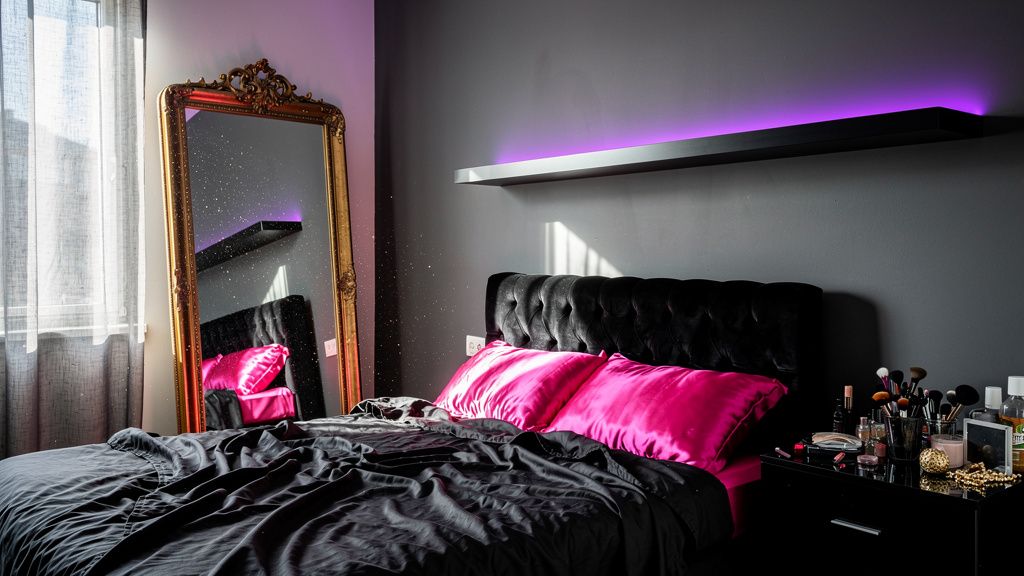
Most baddie bedrooms share a handful of structural commitments regardless of which sub-variant you're working with. The color palette almost always anchors in dark neutrals black, deep burgundy, charcoal accented by something that pops: hot pink, gold, electric purple, or white. That contrast is deliberate, creating visual drama without requiring expensive furniture, which is part of why the aesthetic travels so well across budget levels.
Lighting is where the aesthetic earns or loses its credibility faster than anywhere else. LED strip lights became so synonymous with the baddie bedroom that they're now almost a cliché, but the underlying principle is sound ambient, colored lighting transforms a space in a way that no amount of throw pillows can replicate. Execution is what separates the looks. Strips of LED slapped around a door frame look like a dorm room, while the same hardware integrated behind a headboard, under a floating shelf, or framing a vanity mirror looks like a set. Strategic placement determines whether the lighting elevates the room or cheapens it.
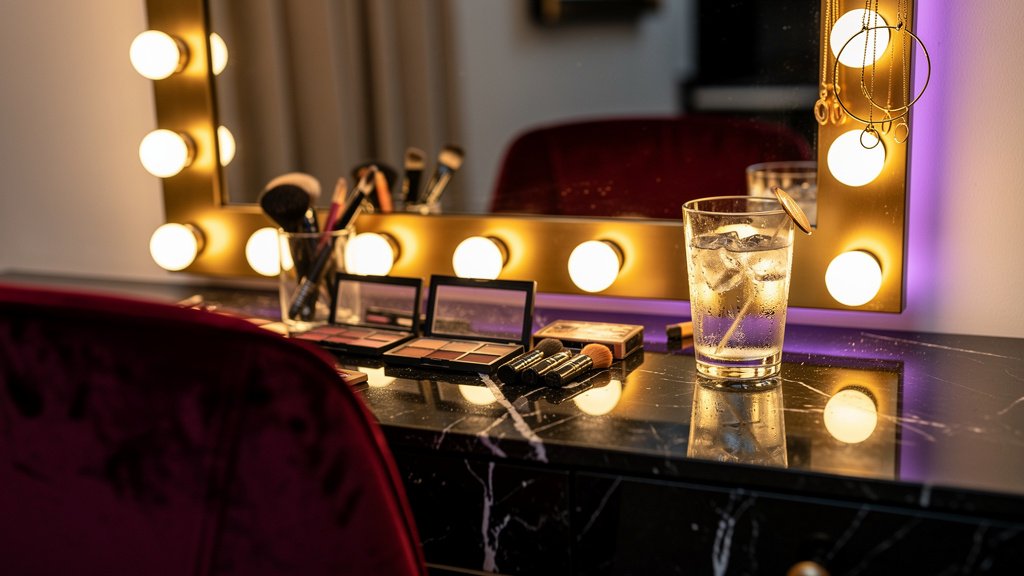
Mirrors deserve more credit than they usually get in discussions of this aesthetic. A large, ornate floor mirror or an arched wall mirror does three things simultaneously: it makes the room feel bigger, it adds a glamour-adjacent focal point, and it serves the practical function of actually looking at yourself which, given the aesthetic's origins in personal image-making, is not incidental. Hollywood-style vanity mirrors with built-in bulb lighting have become a staple for exactly this reason. They signal the aesthetic immediately while being genuinely useful.
Texture is the other pillar that separates a thought-out baddie room from a collection of trending products. Velvet on accent chairs, throw pillows, or headboards photographs beautifully and reads as expensive even when it isn't. Faux fur rugs and satin or silk-feel bedding add tactile richness that flat cotton simply doesn't. The goal isn't to make the room look lived-in; it's to make it look curated, like someone made deliberate choices about how every surface feels and reflects light.
The Sub-Aesthetics Worth Knowing
The baddie aesthetic has fractured into recognizable variants, and knowing which one you're going for will prevent you from buying things that fight each other.
Classic IG Baddie is the original black and gold, velvet headboard, ring light, oversized mirror, maybe a neon sign with a short phrase. It photographs well in warm light and skews toward a luxury-hotel feeling. This is the version most people picture when they hear "baddie room."
Y2K Baddie pulls from early 2000s aesthetics: hot pink and black, zebra or leopard print accents, iridescent or chrome surfaces, and a slightly chaotic energy that reads as intentional maximalism rather than clutter. The Y2K variant has surged on TikTok Shop, where pink zebra-print throw pillow covers and "McBling"-style wall art now have their own product categories. This sub-style tends to skew younger and is considerably more forgiving of bold choices because the whole point is that nothing is too much.
Dark Baddie runs closer to moody glamour deep jewel tones, black velvet, metallic accents in silver or bronze rather than gold, and lighting that stays warm and low rather than colorful. This variant is harder to execute on a budget because it relies more heavily on actual furniture quality and less on accent pieces. A cheap black bedframe reads differently than a cheap pink one.
Soft Baddie is the version that gets underestimated. Dusty rose, mauve, and champagne tones with plush textures and softer lighting the result looks feminine and approachable but still projects the same intentionality as its harder-edged cousins. According to Roomtery's baddie bedroom guide, soft pinks and powder blues add femininity without the boldness of a full dark palette, making them a practical option for rented spaces where painting walls isn't an option.
What Actually Costs Money vs. What Doesn't
Baddie decor creates a tension between looking expensive and actually being expensive the aesthetic can be achieved affordably, except for certain key pieces. A few items genuinely benefit from quality investment, and cutting corners on them shows.
The bed is the most important single piece. The headboard, in particular, sets the entire room's register. An upholstered, tufted, or panel headboard in black, white, or deep velvet will anchor the space in a way that a plain wooden frame or a metal bed from a big-box store simply won't. This is the one place where spending more money is actually worth it, because the headboard appears in every photo, every video, and every morning when you wake up looking at it.
Everything else is more negotiable. Neon signs one of the most recognizable baddie room accessories range from under $30 for LED flex-tube versions to several hundred dollars for genuine glass neon. The glass versions look better, but the LED versions photograph nearly identically, which matters if the room is doubling as a content backdrop. Wall art can be printed at home or ordered cheaply from Etsy; the frame is what makes it look finished. Faux fur rugs from discount retailers are indistinguishable from expensive ones in most lighting conditions.
The vanity setup deserves its own budget category. A Hollywood mirror with dimmable bulbs, a clean surface, and some organized product display does more for the overall aesthetic than almost any other single addition. Functional and deeply on-brand, it photographs as a statement piece rather than furniture.
The LED Light Problem
Most baddie rooms on TikTok are over-lit, and it's making them look worse, not better.
LED strip lights are a tool, not a style. When every surface, shelf edge, and door frame glows a different color simultaneously, the effect is less "confident and glamorous" and more "gaming setup in a teenager's basement." The rooms that actually look good the ones that get saved and reposted use lighting with restraint. One or two colored light sources, placed to create depth and shadow rather than to illuminate everything equally. A neon sign as a focal point rather than a background element. Bias lighting behind a TV or mirror that adds glow without competing with everything else in the frame.
The best baddie rooms treat lighting the way a photographer treats it: as something that shapes what you see and what you don't, not just something that makes the room brighter.
Wall Space and What to Do With It
Wall decor in a baddie room tends to fall into a few reliable categories: oversized statement art, photo collages, neon signs, and mirrors. The common mistake is treating the wall as a collection of individual items rather than as a composition. A single large piece a framed print, a canvas, or a mirror almost always reads more confidently than five medium-sized things arranged in a loose grid.
Photo collages are a legitimate option, particularly for renters who can't paint or hang heavy items. A well-curated collage of fashion photography, personal photos, and graphic prints can work as a statement wall, but it requires actual curation a consistent color story running through the images, consistent frame or border treatment, and enough visual coherence that it reads as intentional. Random photos taped to a wall are not a baddie aesthetic; they're just photos taped to a wall.
One thing I couldn't fully resolve in researching this: there's very little reliable data on how long specific baddie sub-aesthetics hold their search volume before cycling out. The Y2K variant, for instance, has been "trending" on TikTok since roughly 2022, which is an unusually long run for a micro-trend. Whether that signals genuine staying power or just slow saturation is genuinely unclear, and anyone who tells you confidently which specific pieces will still feel current in three years is guessing.
Pulling It Together Without Starting Over
People interested in baddie room decor typically aren't building from scratch they have a room with existing furniture, existing wall colors, and a budget that doesn't cover a full overhaul. The good news is that the aesthetic is more about layering than replacing.
Start with lighting and bedding, because those two elements have the highest visual impact per dollar and can transform the feel of a room without touching the furniture. A dark velvet duvet cover on whatever bed you already own reads differently than a light cotton one. LED bias lighting behind the headboard changes the room's entire atmosphere after dark. From there, add a mirror if you don't have one, swap out throw pillows for velvet or faux-fur versions, and address the wall with one intentional statement piece rather than filling every inch.
The restraint is the hardest part to sell, because the impulse when building this aesthetic is to add more. But the rooms that look genuinely good the ones that feel like a person with a point of view lives there rather than someone who bought a shopping list are the ones where every piece has a reason to be there, and the space between pieces is as considered as the pieces themselves.
A well-executed baddie room is an argument that your personal space should reflect who you are with the same intentionality you'd bring to getting dressed not as performance for anyone else, but because the environment you wake up in every morning actually matters.