Clear Fingernail Polish on Jewelry: Does It Actually Work?

Clear Fingernail Polish on Jewelry: Does It Actually Work?
That cheap ring you've been wearing turns your finger green within hours. The fashion necklace you love is already looking tarnished after just a few wears. You've heard about a hack involving clear fingernail polish, and you're wondering if it's worth trying. The short answer is yes but there's more nuance to it than a simple TikTok hack suggests.
Using clear fingernail polish on jewelry is a legitimate, budget-friendly way to create a protective barrier between your skin and metals that cause discoloration. It's been a staple in the costume jewelry world for decades, passed down through generations of crafters and fashion-forward thinkers who couldn't afford solid gold but refused to give up their style. But like any DIY solution, it comes with trade-offs that are worth understanding before you start painting your entire jewelry box.
How Clear Nail Polish Protects Your Jewelry
The mechanism is straightforward: clear nail polish creates a thin, transparent polymer film that seals the metal surface from exposure to air, moisture, and the oils and acids naturally present on your skin. When base metals like copper, brass, or nickel common in fashion and costume jewelry come into contact with these elements, they oxidize, causing both tarnishing and that dreaded green stain on your finger. The polish acts as a physical barrier, slowing down that chemical reaction considerably.
According to jewelry care experts at Brite, a leading jewelry cleaning brand, "Clear nail polish acts as a barrier, effectively protecting the underlying material of the jewelry from oxidizing agents in the atmosphere, which are the primary cause of tarnishing." This barrier function works particularly well on pieces with plating, where the thin outer layer of precious metal is most vulnerable to wearing through to the base metal underneath.
The protection extends beyond tarnish prevention. If you have a nickel allergy one of the most common metal allergies, affecting roughly 18% of people in North America according to the American Dermatological Association coating costume jewelry with clear polish can create enough of a barrier to prevent the skin irritation and itching that comes from direct nickel exposure. It's not a perfect solution for severe allergies, but it's a practical workaround for everyday fashion jewelry.
When This Hack Works Best (and When It Doesn't)
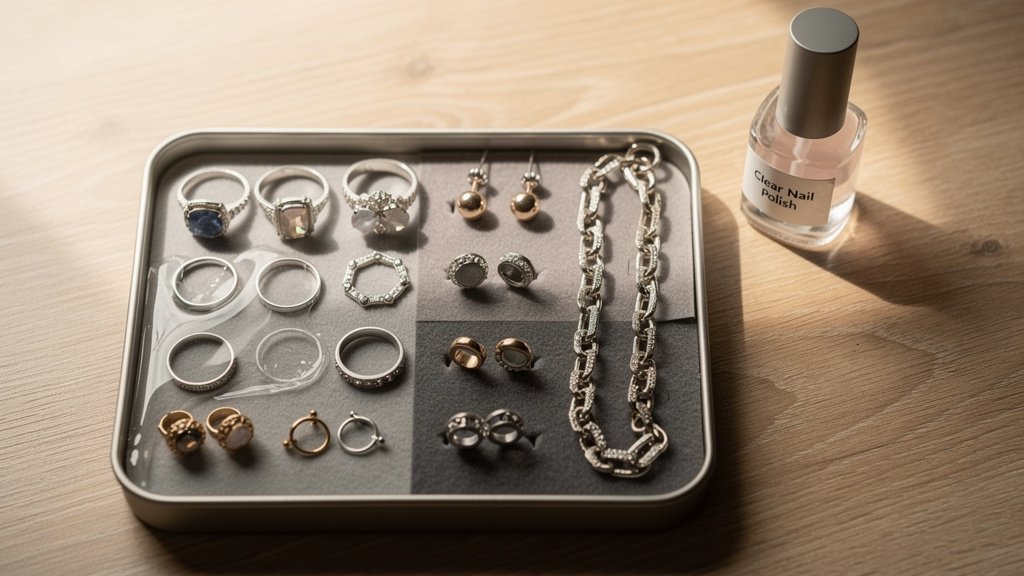
Not all jewelry benefits equally from a coat of clear nail polish. The technique shines brightest on costume jewelry, fashion pieces, and inexpensive accessories where the base metal is the culprit behind discoloration. Think of those $5 rings from the mall, the brass earrings you bought at a craft fair, or the chain on a necklace that's more about the pendant than the metal itself.
Where it falls short is on valuable pieces. Applying nail polish to solid gold, sterling silver, or precious gemstone jewelry isn't just unnecessary it can actually cause problems. The polish can work its way into tiny crevices, settings, and engraved details, making professional cleaning more difficult. Some jewelers report that dried polish residue can trap moisture against metal surfaces, potentially causing pitting or corrosion over time rather than preventing it.
Vintage costume jewelry presents its own set of complications. Sealed vintage pieces can develop "verdigris" that greenish-blue patina that forms on copper alloys when trapped moisture and oils from skin contact can't escape. The polish essentially seals in the conditions that cause this damage, making it irreversible without professional restoration. If you're working with valuable vintage pieces, skip the nail polish and consult a professional jeweler instead.
Application Technique: Doing It Right
Getting the technique right matters more than most people realize. A thick, globulous coat of nail polish looks obvious and will peel quickly. The goal is a thin, even layer that's invisible to the casual observer.
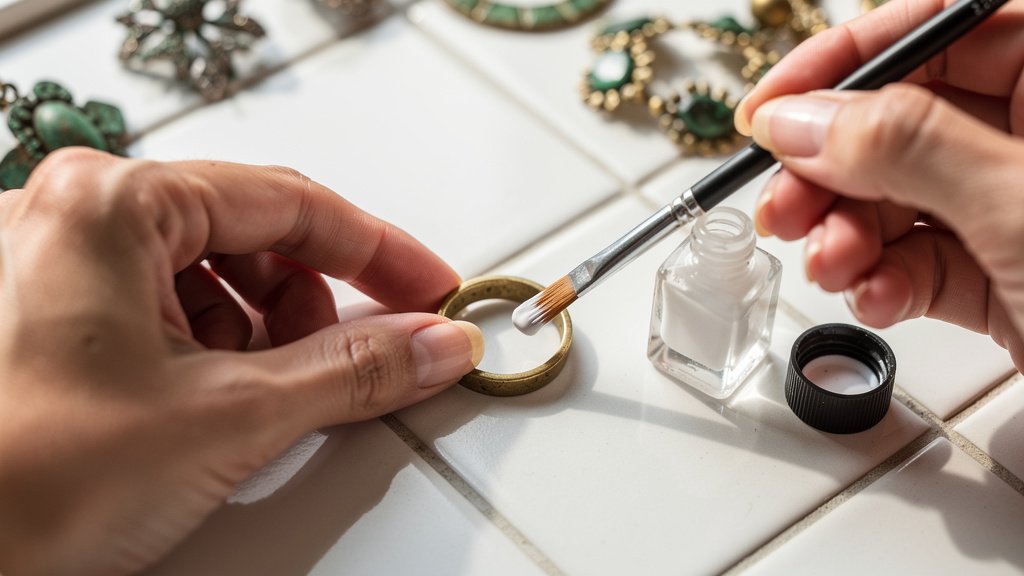
Start with clean, dry jewelry. Any residue from lotions, oils, or old polish will prevent proper adhesion. Use slow, even strokes to apply a thin coat, concentrating on tarnish-prone areas like the inside of rings, the back of earrings, and the clasp areas of necklaces where skin contact is heaviest. Let the first coat dry completely this usually takes 15 to 20 minutes before applying a second thin layer if needed.
A hair dryer on the low, cool setting can speed up drying, though air drying works fine too. The key is patience: applying the next coat before the first is fully dry leads to bubbling and uneven coverage. For rings that cause the most trouble, applying two to three thin coats on the interior surface typically provides enough protection to last several months of regular wear.
You'll need to reapply periodically. How often depends on how frequently you wear the piece and your body chemistry. Someone with particularly acidic skin or who washes their hands frequently might find the polish wears off faster. Watch for signs of wear discoloration returning to your finger, the polish looking patchy, or the piece feeling sticky and touch up as needed.
Downsides and Risks
This isn't a permanent solution, and it requires ongoing maintenance. The polish will eventually chip, flake, or wear thin, especially on pieces that see daily friction like rings and bracelets. You're committing to a maintenance schedule, even if it's just a quick touch-up every few months.
There's also the aesthetic trade-off. Even the clearest nail polish has a slightly glossy finish that can change how light reflects off your jewelry. On some pieces, this added shine looks perfectly fine even desirable. On others, particularly matte or antiqued finishes, it can create an unnatural sheen that screams "I coated this with nail polish." Whether that matters depends on your personal standards and the piece in question.
The American Gem Society and many independent jewelers have pointed out that the technique doesn't fail so much as it masks underlying problems rather than solving them. If your jewelry is turning your skin green, that's a signal that the materials aren't intended for prolonged skin contact. Covering it with polish lets you keep wearing something that might be causing low-level metal sensitivity issues. It's a workaround, not a fix a meaningful distinction if you're prone to metal sensitivities.
Alternatives
If you're not sold on the nail polish approach, several alternatives exist that offer varying levels of protection and permanence. Professional jewelry sealants like Renaissance Wax or ProtectaClear are specifically formulated for use on metals and gemstones, lasting longer and remaining clear without the glossy finish of nail polish. These products cost more typically $15 to $30 per bottle but they're designed for this exact purpose.
Anti-tarnish storage is arguably more effective than any coating. Keeping silver and fashion jewelry in airtight containers with anti-tarnish strips, silica gel packets, or lined jewelry boxes dramatically slows oxidation without applying anything to the piece itself. This approach preserves the original finish completely and requires no reapplication.
For those with chronic green-finger problems, switching to higher-quality materials is the most permanent fix. Surgical-grade stainless steel, titanium, and nickel-free alloys eliminate the allergy concern entirely. Yes, you'll pay more upfront, but you won't spend ongoing time maintaining a protective coating or dealing with skin discoloration.
I couldn't find comprehensive studies comparing the long-term effectiveness of nail polish versus professional sealants on various jewelry types. If you're someone who invests in pieces you intend to keep for years, that uncertainty might be enough to push you toward more established solutions.
When Nail Polish Works and When It Doesn't
Clear fingernail polish on jewelry works it's not an internet myth or a viral lie. It genuinely prevents tarnish and skin discoloration on costume and fashion pieces, and it's an accessible, inexpensive solution for anyone building a jewelry collection on a budget. The technique has legitimate trade-offs: it requires maintenance, changes the piece's finish slightly, and isn't suitable for valuable or vintage jewelry.
For everyday fashion pieces that you don't intend to pass down as heirlooms, it's a perfectly reasonable hack that has earned its place in the DIY jewelry care canon. Just go in with clear expectations it's a maintenance-aware workaround, not a permanent fix, and treating it as such will save you disappointment down the line.