questions for the shoe game wedding

What Actually Is the Wedding Shoe Game?
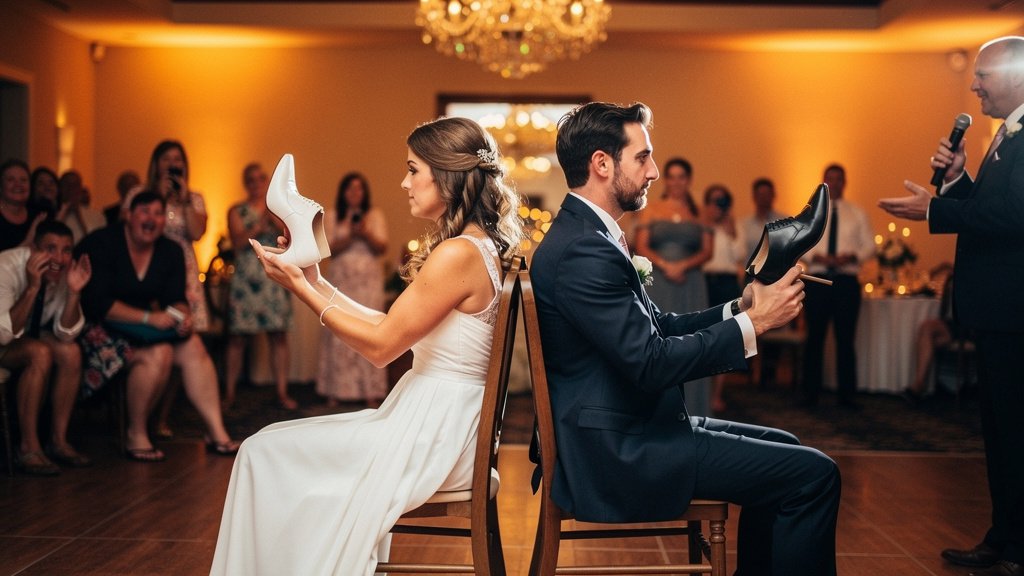
If you've never seen it in action, the questions for the shoe game wedding create one of those reception activities that looks a little奇怪 when you try to explain it but absolutely slays when you see it live. Picture this: the newlyweds sit in chairs placed back-to-back in the middle of the dance floor, each holding one of their own shoes and one of their partner's shoes. A host usually the MC, a bridesmaid, or some brave family member asks a series of questions about the couple, and each person answers by raising either their own shoe or their partner's shoe. The catch? They can't see what the other person is doing, so when answers match, it's a moment, and when they don't, it's even better.
The game works because it forces couples to reveal how well they actually know each other or how differently they perceive the same relationship. Guests get to watch two people who supposedly know everything about each other fumble through questions about who said "I love you" first or who's more likely to leave wet towels on the bed. The mix of sweetness and mild embarrassment is what keeps everyone in the room laughing and leaning forward.
According to The Knot, this reception game has become a staple at wedding receptions across North America, with couples increasingly incorporating it as wedding entertainment that doesn't require any props, rehearsal, or professional setup. You literally just need two chairs and the shoes you're already wearing.
How the Questions for the Shoe Game Wedding Work: The Setup
Before gathering questions for the shoe game at your wedding, it helps to understand the basic mechanics so you can explain them to your host. The Knot outlines the process clearly: both partners remove one shoe, then hand that shoe to each other so each person ends up holding their own shoe in one hand and their partner's shoe in the other. They sit back-to-back in chairs positioned so they cannot see each other or what the other person is holding up.
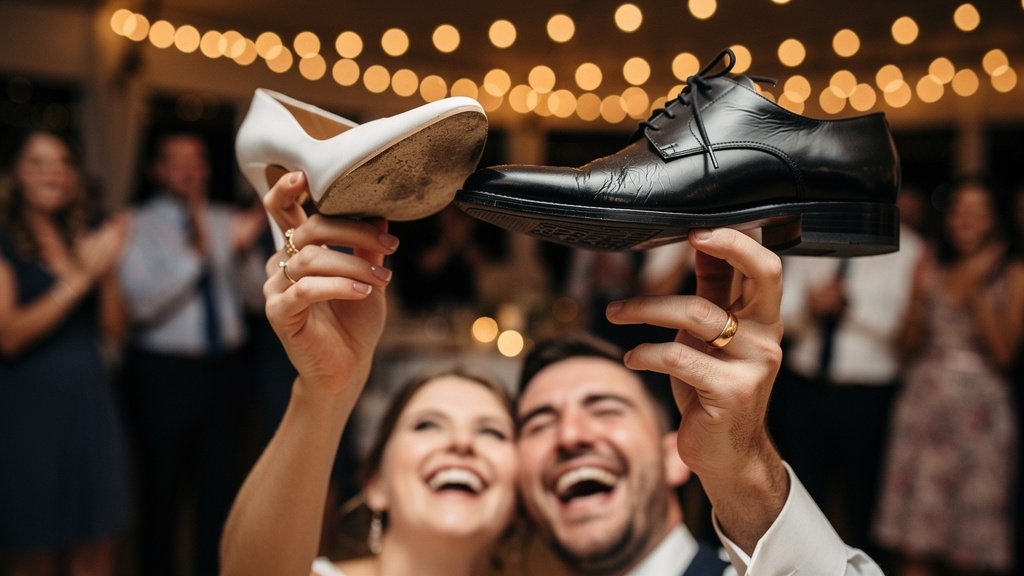
The host then asks a series of questions always phrased as "who" and each person decides whether to raise their own shoe (meaning "me") or their partner's shoe (meaning "them"). When both answers match, it's considered a point for the couple. When they don't match, that's where the real comedy happens. Most hosts will ask the couple to reveal their answers and explain their reasoning, which is where the crowd gets really invested.
The game works best when there's a clear host who's comfortable keeping energy up and who knows the questions in advance. A host who's improvising can let the pacing drag or let moments fall flat. Preparation makes a real difference, even though the whole thing feels casual.
Types of Questions for the Shoe Game Wedding That Work Best
Not all shoe game questions are created equal. Based on what I've seen work at actual weddings and what wedding planning sites consistently recommend, there are four main categories that tend to produce the best moments.
Relationship origin questions work well as an opening round, covering how the couple met, who made the first move, who paid on the first date, and who said "I love you" first. WeddingWire specifically notes that these questions should come first because they "help guests feel connected to your love story," and the familiarity of the subject matter tends to ease both the couple and the crowd into the game.
Personality and habit questions are where things get interesting. Think "who takes longer to get ready," "who is the bigger sleeper," "who is more likely to talk their way out of a speeding ticket," "who hogs the blankets at night." These reveal the day-to-day realities of your relationship and usually get the biggest laughs because every couple has these small negotiations.
Romantic versus practical questions add texture. "Who's more romantic?" gets a different answer than "who handles the groceries better?" Mixing these keeps the game from feeling one-note and shows the full range of your partnership.
The wild card questions are optional but highly recommended. These are the hypotheticals "who would survive longer on a deserted island," "who would make a better superhero," "who would be more likely to get abducted by aliens." They're silly, but they also reveal something about how each person sees the other.
Questions for the Shoe Game Wedding: A Curated List
Here's a mix of questions spanning all categories that I've gathered from multiple wedding planning resources and real wedding experiences. Pick and choose based on what feels right for your crowd.
For the relationship origin round: Who made the first move? Who paid on the first date? Who was the first to say "I love you"? Who proposed? Who picked out the engagement ring? Who was more nervous on the first date?
For personality and habits: Who's the better cook? Who's more likely to forget birthdays and anniversaries? Who takes longer in the shower? Who is the bigger flirt? Who snores louder? Who steals the covers at night? Who's the better driver? Who is more likely to talk their way out of a speeding ticket? Who makes the better breakfast? Who spends more time getting ready?
For romantic versus practical: Who's more romantic? Who plans more elaborate date nights? Who wears the pants in the relationship? Who handles the finances? Who is the better gift giver? Who says "I love you" more often now? Who is the bigger romantic gesture person?
For the wild card round: Who would survive longer on a deserted island? Who would be the first to get rescued? Who would make the better superhero? Who is more likely to believe in aliens? Who would win in a dance-off? Who would handle a zombie apocalypse better?
One thing I notice is that couples often skip the practical questions and go straight for the funny ones, but the mix is what makes the game memorable. A good rule of thumb: start with three or four relationship questions to warm up the room, then hit the couple with five or six personality questions that will get the biggest reactions, then sprinkle in a couple wild cards before wrapping up.
Tips for Making the Questions for the Shoe Game Wedding Actually Work
Having questions is one thing. Making this couple game land is another entirely. From what I've gathered from wedding forums and event professionals, there are a few things that separate a shoe game that kills from one that falls flat.
First, choose a host who can read the room. If the energy is high, they can push through questions faster. If things are lagging, they can pause and let the couple explain their answers more fully. The host sets the pace, and that matters more than most couples realize.
Second, don't overprepare your answers. Part of the magic is seeing whether you and your partner actually agree on these things. If you've rehearsed your answers, you're just performing, and the game loses its spontaneity. Your partner's answer to "who is the bigger clean freak" will either confirm everything you know or completely blindside you, and either way it becomes one of those moments everyone talks about later.
Third, think about your guest list before choosing edgy questions. If you have conservative relatives in the front row, maybe skip anything that could get too TMI. The game works best when everyone feels comfortable, including the couple.
Fourth, consider having guests submit questions in advance. WeddingWire recommends collecting questions from friends and family through your wedding website, which adds an element of surprise and makes the game feel more personal. Some couples even have guests text questions to the MC during the reception.
Customizing Questions for Your Crowd
The standard questions for the shoe game wedding are great, but there's room to personalize it. Some couples add a scoring system and award a "prize" to whoever gets more matching answers. Others swap in questions that are specific to their relationship like "who is the bigger coffee snob" or "who would rather go to a concert versus a museum."
If you want to go bigger, you can incorporate the shoe game into a larger reception flow. Some couples do it after the first dance and before cake cutting. Others save it for when the dance floor needs a break and guests are settling into their seats. Timing matters less than having a clear moment when everyone knows the game is starting.
The real secret is this: the questions for the shoe game wedding are just the vehicle. What makes the game work is watching two people who love each other try to prove how well they know each other and occasionally failing in the most charming way possible and those charming failures become the stories that guests retell at anniversaries years later.