How to Choose a Wedding Dress: A Practical Guide to Finding Your Gown

How to Choose a Wedding Dress: A Practical Guide to Finding Your Gown
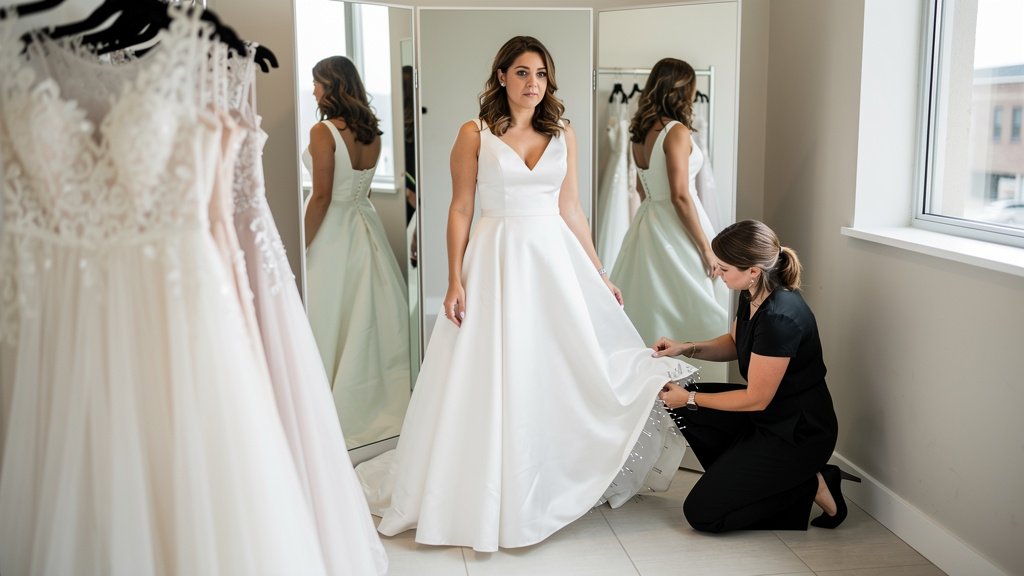
The moment you start shopping for a wedding dress, you enter a world with its own vocabulary, its own economics, and its own timeline that has almost nothing in common with buying any other garment you've ever owned. Most wedding gowns are made to order, which means the dress you try on in a salon isn't the dress you'll wear down the aisle it's a sample, often pinned and clipped to approximate your size, and the actual gown won't arrive for four to nine months after you place the order. Add another two to three months for alterations, and you're looking at a process that should ideally begin a full year before your wedding date.
Understanding how to choose a wedding dress means understanding this timeline first, because every other decision budget, silhouette, venue considerations flows from it.
What Should Your Wedding Dress Budget Actually Cover?
The sticker price on a wedding dress is not the final number, and this catches more brides off guard than almost anything else in the shopping process. According to Zola's wedding cost data, the average wedding dress costs between $1,500 and $2,500, with most brides landing around $2,000 to $2,250. But that figure only covers the gown itself. Alterations typically add $150 to $550 depending on complexity basic hemming on a simple dress starts around $150, while multi-layer gowns with lace or beading can run $300 to $500 just for the hem. Then there's the veil, shoes, undergarments, and any accessories the salon will inevitably suggest once you've said yes.
A realistic budget accounts for all of it. If you have $2,500 total to spend, your dress budget is probably closer to $1,800 once you factor in everything else. The Knot's 2024 Real Weddings Study found that only 6% of brides spent $5,000 or more on their gown, which means the vast majority are working within much tighter constraints than wedding media often suggests. There's no shame in shopping at the lower end of the market plenty of gorgeous dresses exist under $1,000, and some brides find exactly what they want at department stores or online retailers for a fraction of boutique prices.
Which Silhouette Works for Your Body?
Silhouette is the single most important structural decision you'll make, and it's worth understanding the basics before you walk into a salon. The terminology can feel overwhelming godet, trumpet, basque waist but most wedding dresses fall into four main categories, and everything else is a variation.
The A-line silhouette is fitted through the bodice and flares gently from the waist, creating the shape of the letter A. According to Justin Alexander's bridal guide, this style "flatters just about every body type" because the gradual flare skims over hips and thighs without clinging. It's also one of the most comfortable options for dancing and moving throughout a long reception. If you're uncertain about your body type or simply want something universally forgiving, A-line is a safe starting point.
The ball gown shares the fitted bodice of an A-line but features a dramatically fuller skirt, often with layers of tulle or organza creating volume. This is the princess silhouette, the one that photographs dramatically in grand venues with high ceilings and sweeping staircases. The trade-off is mobility ball gowns are heavy, they're difficult to bustle, and they don't work well in intimate spaces or outdoor settings where uneven ground becomes a real obstacle.
Mermaid and trumpet silhouettes are fitted through the bodice and hips, flaring out at different points. A true mermaid flares at or below the knee, creating a dramatic curve that showcases an hourglass figure but significantly restricts leg movement. The trumpet flares slightly higher, around mid-thigh, offering a bit more freedom while still emphasizing curves. These styles are stunning on brides who want to highlight their shape, but they require confidence there's nowhere to hide, and you'll need to practice walking in the sample to know whether you can manage it comfortably.
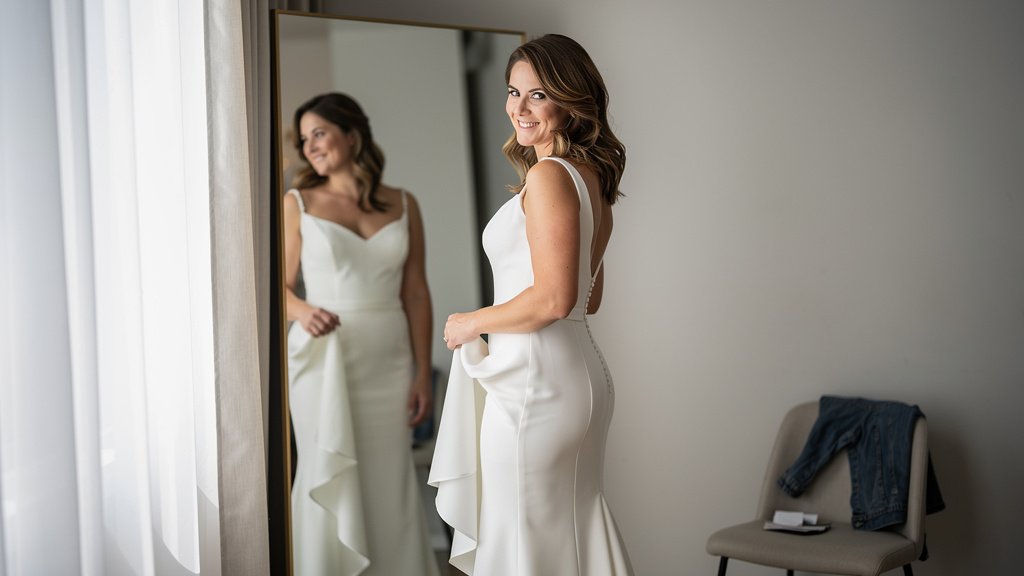
The sheath silhouette falls straight from the bodice with minimal flare, creating a sleek, column-like effect. It's the most modern and minimalist option, often favored for beach weddings, courthouse ceremonies, or brides who want understated elegance. Sheath dresses show every line, which means fit is critical and alterations are non-negotiable.
When Should You Start Shopping?
Twelve to eighteen months before your wedding is ideal. Nine months is workable but tight. Six months puts you in rush-order territory, which typically means paying a premium and accepting a narrower selection of available styles.
This timeline surprises brides who assume wedding dress shopping works like regular retail, where you buy something and take it home the same day. It doesn't. Most bridal gowns are made to order in your specific size after you place the order, and production takes four to eight months depending on the designer. Some designers offer rush options, but these come with fees ranging from $100 to several hundred dollars, and not every style is available for rush production.
After the dress arrives, you'll need two to three months for alterations. According to Belle Amour Bridal, the first fitting typically happens eight to twelve weeks before the wedding, with a second fitting four to six weeks out and a final fitting one to two weeks before the big day. This multi-fitting process exists because alterations are done in stages the seamstress can't hem a dress until the bodice fits correctly, and she can't add a bustle until the hem is finished.
Brides who start shopping early have another advantage: time to change their minds. It's not uncommon to say yes to a dress, go home, and realize over the following weeks that something doesn't feel right. Starting early gives you the breathing room to cancel an order (usually possible within a short window after purchase) and find something better without derailing your entire timeline.
How Do You Prepare for Your First Appointment?
Photos are more useful than a sprawling Pinterest board aim for five to ten images that represent specific elements you're drawn to, like a neckline you love, a fabric texture that appeals to you, or a silhouette that caught your eye. Bridal stylists use these images to understand your aesthetic quickly, which makes the appointment more efficient and increases the odds that the dresses they pull will actually resonate.
Limit your entourage. Two to three people is the sweet spot enough for honest feedback, not so many that you're managing a committee of conflicting opinions. According to bridal consultant advice compiled by Love Letter Weddings, some salons have seen friendships end over wedding dress shopping disagreements, which sounds dramatic until you've watched a bride try to please her mother, future mother-in-law, and three bridesmaids simultaneously. Pick people whose taste you trust and whose opinions you can handle hearing, even if they're critical.
Wear nude undergarments and bring any specific items you know you'll use a strapless bra if you own one you like, shapewear if you plan to wear it on the day. Salons have samples of these items, but they're shared among hundreds of brides, and you'll get a more accurate sense of how a dress will look on you if you're wearing your own foundations.
Be honest about your budget. Stylists at reputable salons won't try to upsell you into something you can't afford, but they can only help you if they know your limits. Trying on dresses $1,000 over your budget "just to see" is a recipe for disappointment you'll fall in love with something you can't have, and everything within your actual range will feel like a compromise.
What Happens During Alterations?
Almost no wedding dress fits perfectly off the rack. Even made-to-order gowns are produced using standard size ranges, not custom body measurements, which means alterations are built into the process from the start. The question isn't whether you'll need alterations it's how extensive they'll be.
The most common alterations are hemming (adjusting the length), taking in or letting out the bodice (adjusting the fit through the bust and waist), and adding a bustle (the hooks or buttons that allow you to lift the train for the reception). These are standard, and any competent seamstress can handle them. More complex alterations adding sleeves, changing a neckline, removing or adding embellishments require more skill and cost more money.
I couldn't find reliable data on what percentage of brides use the salon's in-house alterations versus independent seamstresses, but the choice matters. Salon alterations are convenient and the seamstresses know the dress construction intimately, but they're often more expensive. Independent seamstresses may offer better prices, but you'll need to transport the dress back and forth, and you're responsible for vetting their work quality. If you go the independent route, ask for references specifically from brides who had wedding gowns altered formalwear is a different skill set than hemming jeans.
Should You Shop Online?
Online wedding dress shopping has exploded in recent years, and for good reason prices are often lower, selection is broader, and you can browse at 2 a.m. in your pajamas without a salon appointment. According to Forbes, retailers like Anthropologie, Reformation, and direct-to-consumer brands have made bridal shopping more accessible than ever.
The catch is fit. Wedding dresses are structurally complex garments with boning, corsetry, and construction details that don't translate well to flat photographs. What looks ethereal on a model may look completely different on your body, and returning a wedding dress is more complicated than returning a regular online purchase. Most online bridal retailers have strict return windows, and some charge restocking fees.
If you're considering online shopping, try on similar silhouettes in person first even at a department store or a friend's closet so you know what shapes work for your body. Then shop online within that silhouette. This hybrid approach gives you the price benefits of online retail with some of the fit confidence of in-person shopping.
How Do You Know When You've Found the Right Dress?
The "say yes to the dress" moment that tearful, overwhelming certainty you see on television doesn't happen for everyone, and that's fine. Some brides feel it immediately. Others try on dozens of dresses and eventually settle on the one that checks the most boxes without any lightning-bolt revelation. Both experiences are valid.
According to bridal stylist Taylor from Ashley Grace Bridal, "Trust the process and enjoy the moment. Dress shopping should be one of the fun parts of wedding planning!" But she also acknowledges that finding "the one" sometimes takes multiple appointments, and brides shouldn't feel pressured to decide on the spot.
What matters more than the feeling is the practical fit. Can you move in it? Can you breathe? Can you imagine wearing it for eight to ten hours? Does it work with your venue a cathedral-length train in a beach ceremony is a logistical nightmare, and a minimalist sheath might get lost in a grand ballroom. The right dress balances emotion with practicality, and sometimes the most romantic choice is the one that lets you actually enjoy your wedding day instead of fighting your gown.
What Questions Should You Ask Before Buying?
Before you commit, get clear answers on these points: What is the total cost including any fees? What is the expected delivery date? What is the cancellation policy and window? Does the salon offer alterations, and if so, what's the estimated cost? What happens if the dress arrives damaged or incorrect?
Ask about payment structure too. Most salons require a deposit (typically 50%) when you order, with the balance due when the dress arrives, though some offer payment plans. Either way, make sure you understand exactly what you're agreeing to before you sign anything.
One question that often gets overlooked: What size should I order? Bridal sizing runs smaller than street sizing a bride who wears a size 8 in regular clothes might be a 12 or 14 in bridal. Salons typically order based on your largest measurement (bust, waist, or hips) because it's easier to take a dress in than let it out. If you're between sizes, ordering up is almost always the safer choice.
What to Remember When Dress Shopping
- Start shopping 12-18 months before your wedding to allow 4-9 months for ordering and 2-3 months for alterations
- Budget for more than the dress itself alterations, veil, undergarments, and accessories can add $400-$1,000 to your total
- A-line silhouettes flatter most body types; mermaid and trumpet styles require comfort with a fitted look
- Bring 5-10 specific inspiration photos to your appointment, not an overwhelming Pinterest board
- Limit your entourage to 2-3 trusted people whose opinions you can actually handle
- Be honest with your stylist about budget trying on dresses you can't afford leads to disappointment
- Expect bridal sizing to run 2-4 sizes smaller than your street size
- The "lightning bolt" moment doesn't happen for everyone, and that's completely normal