Michelle Obama Spring Fashion Playbook: What Her Latest Looks Actually Tell Us
Michelle Obama spring fashion has never really been about the clothes. Mainstream coverage reduces each appearance to a brand name and a price tag when the more interesting story is the architecture of the choices themselves.
The most recent example landed in Los Angeles, where Obama stepped out after a meeting at CNN headquarters wearing a fitted white T-shirt, a Tory Burch floral jersey slip skirt cut on the bias, mahogany pointy-toe slingbacks, an Etro clutch, and oversized gold-rimmed Gucci sunglasses. Harper's Bazaar described the skirt's print as drawing "vibrant over-exposed shades of red, green, and blue" from 1930s woven textile motifs a $600 piece that reads as effortless precisely because of how carefully it was chosen. One investment item does the heavy lifting, everything else calibrated to not compete with it.
The Tee-and-Skirt Equation Defining Michelle Obama Spring Fashion
There's a reason the white T-shirt keeps showing up in Michelle Obama spring fashion looks. It's not laziness or a capsule wardrobe cliché it's a deliberate contrast strategy. Pair a plain cotton tee with something as architecturally interesting as a bias-cut jersey skirt printed with art-historical references, and the skirt becomes the entire sentence. The tee is just punctuation. Obama and her longtime stylist Meredith Koop have been working this tension for years: the accessible item anchoring the statement piece, preventing the overall look from reading as costumed or untouchable.
Koop, who co-authored Obama's 2025 book The Look a #1 New York Times bestseller featuring more than 200 photographs, including never-before-seen images has described their collaboration as rooted in the idea that fashion should amplify a message rather than distract from one. The book covers Obama's style evolution from her husband's U.S. Senate campaign through her years as First Lady and into her current post-White House public life, and reads not as a coffee table object but as a fairly candid account of how intentional the whole project has been from the start.
What's notable about the spring 2026 LA look specifically is that it collapses the formality gap in a way that feels genuinely contemporary. A CNN meeting is professional territory. Most women navigating that context would default to a blazer, a structured dress, something that signals seriousness through conventional codes. Obama showed up in a T-shirt and a skirt with a 1930s woven-textile print on it, accessorized with Gucci sunglasses and an Etro clutch and the look read as more polished, not less, than the blazer alternative would have. The execution relies entirely on understanding proportion, texture, and the specific weight of each item in relation to the others.
Michelle Obama Spring Fashion as a Long-Running Philosophy
Michelle Obama spring fashion choices that generate the most coverage tend to be the ones that feel like they shouldn't work the combinations that break a rule and then demonstrate why the rule was arbitrary in the first place. Obama has been doing this consistently enough that the pattern matters more than just the individual moments.
During the opening of the Obama Presidential Center in Chicago, she wore a Thom Browne gray-and-white striped skirt suit with gold buttons, a frayed blazer edge, and corset-inspired tailoring a look that merged institutional formality with something genuinely fashion-forward, appropriate to the gravity of the occasion without being stiff. That same week she'd been cycling through looks that ranged from Matthieu Blazy's Bottega Veneta to pieces from the Chanel Spring/Summer 2026 ready-to-wear collection, demonstrating a range that most public figures don't bother with and most stylists can't quite manage without the looks feeling disconnected from each other.
The through-line in Michelle Obama spring fashion isn't brand loyalty or a signature silhouette. It's a consistent commitment to clothes that carry some kind of conceptual weight a historical reference, a designer relationship, a deliberate subversion of what the occasion would normally demand. The Tory Burch skirt's 1930s textile print isn't an accident. It's a choice that rewards the viewer who notices it and doesn't punish the viewer who doesn't, which is actually a sophisticated calibration.
Mrs. O, the blog founded in 2008 specifically to track Obama's fashion choices, identified these themes early: what its founder called "sartorial diplomacy, championing the artisan designer, the high and low democratic mix." Vanessa Friedman of The New York Times picked up on the same threads in a retrospective that the Mrs. O blog cited approvingly at the end of Obama's time in the White House. The analysis hasn't aged out if anything, the post-First Lady years have made the intentionality clearer, because Obama is now dressing without the institutional constraints of that role and the choices still reflect the same underlying logic.
The "Obama Effect" Is Real, and It Still Works
When Obama wore a $148 Donna Ricco sundress on The View in June 2008 early in the campaign, before the full weight of public scrutiny had settled in the dress sold out within minutes of the appearance. The piece was available at White House Black Market, a mid-market retailer, and the speed of the sellout was striking enough that fashion journalists started tracking what they called the "Obama Effect," a measurable spike in sales for any item she wore publicly.
That effect has never really gone away, though it operates differently now. The Tory Burch skirt she wore in LA retails for $600 not a fast-fashion impulse buy but searches for Tory Burch slip skirts and bias-cut floral midi skirts spiked immediately after the photos circulated. The mechanism is the same as 2008; the price point has shifted upward, reflecting both where Obama is in her public life and where the fashion conversation has moved more broadly. What's interesting is that the effect persists even when the item is expensive enough to be aspirational rather than immediately purchasable. People aren't buying the skirt. They're buying the idea of the skirt, and then finding their own version of it.
This is a more durable form of fashion influence than the celebrity-endorsement model, where a famous face wears a product and the transaction is essentially transactional. Michelle Obama spring fashion influence works because it's rooted in a legible point of view you can understand why she made the choice she made, which means you can apply the same logic to your own wardrobe without copying the exact item.
What The Look Actually Reveals About Michelle Obama Spring Fashion
Co-written with Koop and published in late 2025, The Look is the closest thing we have to an official account of how Obama thinks about dressing. The book illustrated with more than 200 photographs, some never previously published is structured around the idea that fashion is a tool for amplifying a message, not a vanity project or a distraction from substance. Obama has said publicly that she sees clothes as a way to draw attention to what she wants people to pay attention to, which is a more sophisticated media theory than most politicians or public figures bother to articulate.
For Michelle Obama spring fashion specifically, the book's logic translates into a few consistent principles that show up across her recent looks. Fluid silhouettes over rigid ones the bias-cut skirt rather than the structured pencil skirt. Prints that carry a reference rather than just a pattern. Accessories that introduce a luxury signal without overwhelming the base outfit. And a persistent willingness to mix registers: the high-end clutch with the cotton tee, the runway piece with the classic pump.
Reliable data on how her book tour styling choices specifically affected sales for the individual designers featured remains elusive the kind of granular retail tracking that would tell you whether the Bottega Veneta moment or the Chanel appearance moved units. Fashion PR is notoriously opaque about that kind of attribution, and the brands themselves rarely confirm it. But the circumstantial evidence from two decades of Obama appearances suggests the effect is real even when it's not being formally measured.
The Practical Takeaway for Anyone Paying Attention
The spring outfit formula that keeps surfacing in Michelle Obama spring fashion appearances one statement piece, one neutral anchor, carefully chosen accessories that don't compete is genuinely replicable at almost any price point. The Tory Burch skirt is $600, but the logic of pairing a bias-cut floral midi with a plain white tee works equally well with a $60 version from any number of contemporary brands currently producing exactly that silhouette. As for the Gucci sunglasses, their function a single luxury signal that elevates the whole can be fulfilled by a vintage find or a well-chosen contemporary alternative.
What's harder to replicate is the confidence that makes the formula work. There's a version of the tee-and-slip-skirt combination that looks like someone couldn't decide whether to be casual or dressed up and split the difference unhappily. Obama's version doesn't read that way because the proportions are exact and the accessories are precise nothing is there by accident, and nothing is there to hedge.
That precision is Koop's contribution as much as Obama's instinct, and the collaboration tends to get collapsed into a single authorial voice in most coverage. The book makes the partnership clearer: Koop brings the technical architecture, Obama brings the message. The spring looks that are generating the most attention right now are the product of both, and understanding that makes them more useful as reference points rather than less.

The Ongoing Evolution of Michelle Obama Spring Fashion Style
The Obama Presidential Center opening gave the fashion conversation a new focal point a moment where the clothes were explicitly part of a larger cultural statement, as they always have been, but where the context made that legible to audiences who don't normally track this closely. The Thom Browne suit at the Center's opening wasn't just a good look for a significant occasion; it was a choice that honored the gravity of what was being inaugurated while demonstrating that formal dress doesn't have to be conservative dress, that a frayed blazer edge and corset tailoring can coexist with institutional seriousness.
That's the argument Michelle Obama spring fashion has been making for nearly two decades, and it's one the broader culture is still catching up to: that the way you dress for a moment is part of how you define the moment, and that treating clothes as trivial is itself a choice with consequences usually the consequence of ceding that territory to someone else's definition of what the occasion means.
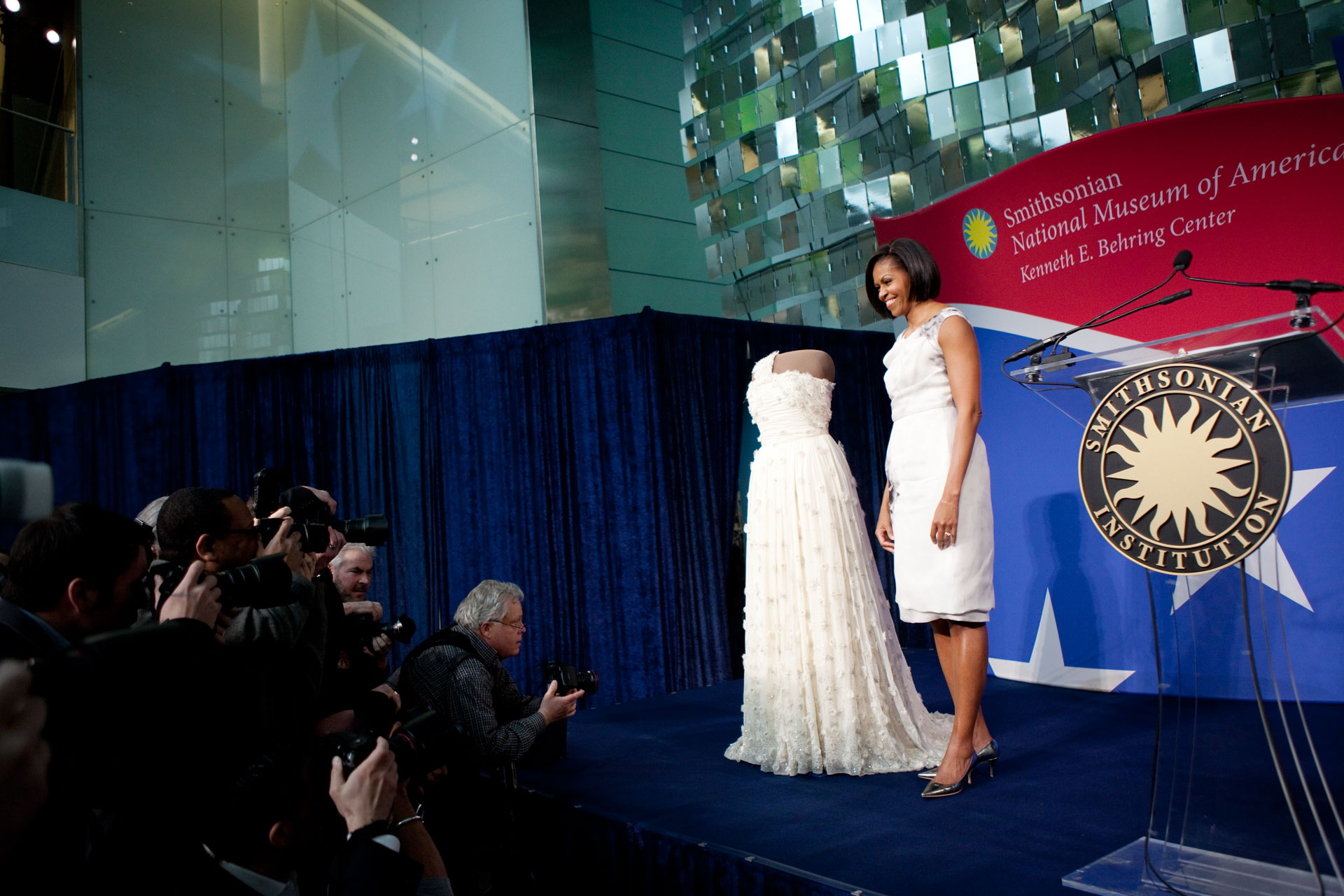
Whether the current wave of Michelle Obama spring fashion looks the floral slip skirts, the tee-and-bias combinations, the Thom Browne tailoring will be remembered the way the 2009 inaugural Jason Wu gown is remembered remains an open question. What's clear is that the underlying philosophy hasn't changed, and that for anyone trying to understand how to dress with intention rather than just habit, Michelle Obama spring fashion choices remain one of the more instructive ongoing case studies in public life.