How to Clean Jewelry with Mild Dish Soap: The Complete Guide

How to Clean Jewelry with Mild Dish Soap: The Complete Guide
Your grandmother probably cleaned her jewelry with nothing more than soap and water, and there's a reason this method has endured for generations. Using mild dish soap for cleaning jewelry remains one of the safest, most accessible approaches you can take at home far gentler than commercial dips and considerably cheaper than professional ultrasonic cleanings.
The key word there is "mild." Not every dish soap belongs near your engagement ring or grandmother's pearls. The wrong formula can leave films, strip finishes, or worse damage stones that took millions of years to form. What follows covers which products actually work, which gemstones need special handling, and the cleaning process jewelers rely on.
Why Mild Dish Soap Works for Jewelry Cleaning
The chemistry here is straightforward. Dish soap is designed to cut through oils and greases the same substances that make your jewelry look dull and lifeless. Body oils, lotions, and everyday grime accumulate on rings, necklaces, and bracelets, creating a film that scatters light rather than letting it sparkle.
What makes dish soap ideal is its balance: it's effective enough to dissolve stubborn residue but gentle enough not to attack the metals and stones themselves. Professional jewelers have relied on this approach for decades. Elizabeth Doyle of Doyle & Doyle told Vogue that warm water and mild dish soap specifically Ivory represents the safest way to clean rings at home. Multiple jewelry professionals specifically recommend Dawn dish soap for its established reputation as both gentle and effective.
The American Gem Society notes that warm water, mild detergent, and a soft brush are the safest cleaning materials for nearly all jewelry which is why the dish soap method persists even with specialized commercial products widely available.
Types of Jewelry and Their Soap Compatibility
Not all jewelry responds the same way to soap and water. Understanding what you're working with matters enormously.
Safe for Dish Soap Cleaning
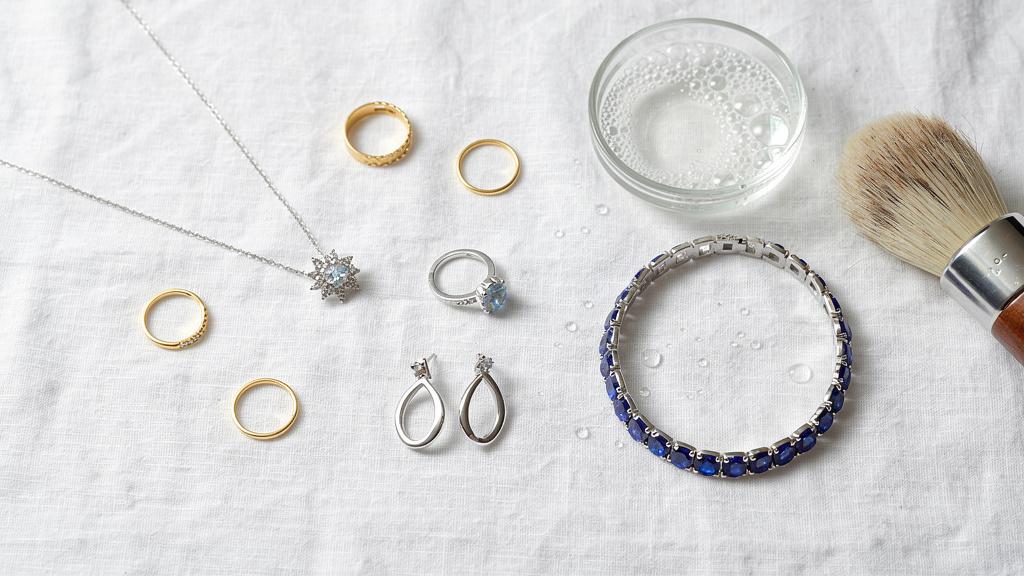
Gold, platinum, and diamond jewelry represent the sweet spot for dish soap cleaning. These materials are remarkably durable and can handle a gentle soak without issue. The Gemological Institute of America notes that diamonds are essentially impervious to mild soap, making this the lowest-risk cleaning approach for engagement rings and wedding bands.
Sapphires and rubies also handle dish soap well. These stones rank among the hardest gemstones after diamonds, so the mild surfactants in dish soap pose no threat. Cubic zirconia and moissanite similarly tolerate this cleaning method without drama.
Gemstones Requiring Caution
Several popular gemstones demand more careful treatment. The American Gem Society warns that softer or more porous gems can absorb water and soap, leading to clouding or damage over time.
Gemstone categories break down as follows:
- Never soak: Pearls, opals, turquoise, amber, coral, and emeralds these stones are porous or treated and can be damaged by prolonged water exposure
- Use extra gentle technique: Morganite, tanzanite, amethyst, and other moderately hard gems should be cleaned with shorter soaks and gentle handling
- Generally safe with care: Sapphires, rubies, diamonds, aquamarine, and topaz respond well to the dish soap method
Metal Considerations
Sterling silver can safely be cleaned with mild dish soap, though you'll want to dry it thoroughly to prevent water spots. Stainless steel jewelry is particularly forgiving mild dish soap contains no gritty particles that could scratch its polished surface. Gold-filled and vermeil pieces handle dish soap fine, but avoid scrubbing too aggressively if the gold layer is thin.
Best Dish Soaps for Jewelry Cleaning
Not all dish soaps are created equal. Professional jewelers and gemological organizations tend to agree on which formulas are safe and which should stay far from your jewelry box.
What you avoid matters as much as what you choose. Anything with added bleach, antibacterial agents, or abrasive scrubbing particles should be ruled out immediately. The original blue Dawn remains the most frequently recommended option among professional jewelers its formula has stayed consistent for years, and its gentleness is well-documented across the industry.
"The safest way to clean your rings at home is with warm water and a mild dish soap I use Ivory." Elizabeth Doyle, Doyle & Doyle
How to Clean Jewelry with Dish Soap: Step by Step
Here's the complete process professional jewelers use, broken into clear steps:
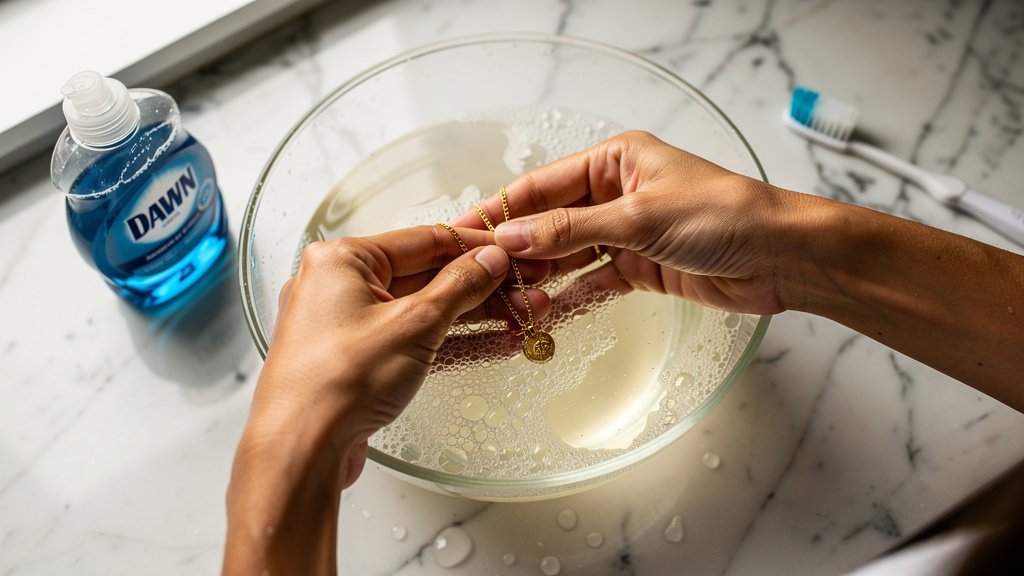
- Prepare your workspace: Line a bowl or container with a soft cloth to prevent scratches if pieces slip. Fill with warm (not hot) water aim for body temperature or slightly warmer.
- Add the soap: Add just a few drops of mild dish soap to the water. More isn't better here; excessive soap leaves residue that requires thorough rinsing.
- Soak the jewelry: Place your pieces in the solution and let them soak for 15-20 minutes. This gives the soap time to break down accumulated oils and residues.
- Gently scrub: Use a soft-bristled toothbrush (a baby toothbrush works perfectly) to gently scrub around stones, in settings, and across surfaces. Pay extra attention to the underside of rings where buildup accumulates.
- Rinse thoroughly: Run pieces under clean, lukewarm water to remove all soap residue. This step is critical leftover soap film creates its own dulling effect.
- Dry completely: Pat dry with a soft, lint-free cloth. Allow pieces to air dry completely before storing, as trapped moisture causes problems over time.
The entire process takes less than 30 minutes and costs essentially nothing compared to commercial cleaning products.
Common Mistakes to Avoid
Even with the right soap, certain habits can undermine your efforts or cause damage.
Using hot water is perhaps the most common error. Extreme temperatures can affect stone settings, particularly if there's any looseness you don't know about. Warm water does the job safely.
Skipping the rinse step creates more problems than it solves. Soap residue left behind appears as a film that makes jewelry look dull the exact opposite of what you wanted.
Avoiding any soak at all means missing the primary benefit: time for the soap to penetrate and dissolve oils that scrubbing alone can't reach. Even a brief 5-minute soak improves results substantially.
Using the same toothbrush you use for your teeth introduces bacteria and potentially harsher bristles than jewelry needs. A dedicated soft toothbrush protects your pieces.
Damp jewelry stored away will tarnish metals and can damage porous stones, so pieces should be completely dry before going back in the jewelry box.
When to Skip the Dish Soap Method
Certain situations call for professional cleaning instead of home methods. If your jewelry features loose stones, visible damage to prongs, or pearls strung on silk (which stretches when wet), professional attention makes more sense than DIY cleaning.
Antique jewelry with fragile patinas or original finishes should generally stay away from any cleaning method that involves liquids. The same applies to estate pieces with unknown stone treatments emeralds, for instance, are often oil-treated, and soap can strip that treatment.
Costume jewelry with glued components should be cleaned very cautiously, if at all. Water and soap can weaken adhesive bonds over time, causing stones to fall out.
Applications and Benefits
The dish soap method excels across multiple scenarios. Regular maintenance cleaning between professional cleanings keeps pieces looking their best and reduces the need for intensive interventions. After particularly greasy activities cooking with oils, applying lotions, or swimming in chlorinated pools a quick soap bath reverses much of the damage.
For engagement rings worn daily, a weekly clean with this method keeps the sparkle up and gives you a chance to check whether any settings have loosened a small habit that can prevent losing a stone entirely.
The accessibility factor matters too. Every household has dish soap. This means you can clean jewelry anywhere at home, while traveling, or at a friend's place. No special trips to the jewelry store or waiting for mail-order cleaners to arrive.
The cost benefit is substantial. Professional ultrasonic cleaning runs $50-150 per session. Commercial jewelry cleaners cost $10-30 and contain chemicals with expiration dates. Dish soap costs pennies per cleaning and delivers comparable results for routine maintenance.
Expert Tips for Better Results
For jewelry that's particularly dirty, a single drop of ammonia added to the soap solution appears in multiple professional recommendations though it should be used sparingly, with an especially thorough rinse to follow.
A soft bamboo brush or baby toothbrush provides the ideal bristle stiffness: enough to dislodge debris without scratching metals or stones. Replace these regularly since bristles wear down over time.
Clean jewelry over a drain catcher or plugged sink. The small size of rings and earrings means they're easy to drop and easy to lose. This one precaution prevents heartbreaks.
For pieces with many small details, a soft artist's brush works better than a toothbrush. The smaller head reaches into filigree and detailed settings where larger brushes can't go.
A quick dip in plain water with a few drops of ammonia after the initial soap clean can add extra sparkle, since it removes lingering residue more effectively than plain water on its own.
FAQs
Can I use dish soap to clean my engagement ring?
Yes, mild dish soap is one of the safest methods for cleaning engagement rings, particularly those set with diamonds, sapphires, or rubies. Use warm (not hot) water, a few drops of soap, soak for 15-20 minutes, then gently scrub with a soft toothbrush before rinsing thoroughly.
What dish soap is best for cleaning jewelry?
Dawn Original (the blue formula) ranks as the most frequently recommended by professional jewelers. Ivory and Seventh Generation also work well. Avoid anything with bleach, antibacterial additives, or abrasive particles.
How long should I soak jewelry in dish soap water?
A soak of 15-20 minutes works for most pieces. Heavily soiled jewelry can go longer up to 30 minutes but avoid leaving pieces unattended for extended periods. Porous stones like pearls or opals should never soak; wipe them clean instead.
Can I clean pearls with dish soap?
Pearls should never be soaked in dish soap water. They're organic gems that absorb liquids, which can cause them to lose luster or become damaged. Clean pearls by wiping them gently with a soft, damp cloth after wearing.
Will dish soap damage my gold jewelry?
Mild dish soap won't damage gold jewelry it's actually one of the methods jewelers recommend. Gold handles mild soaps well, though a thorough rinse and complete drying afterward will prevent water spots from forming.
Can I use dish soap on sterling silver?
Yes, you can safely clean sterling silver with mild dish soap. Dry it immediately and thoroughly after cleaning, as silver can tarnish when exposed to moisture for extended periods. Consider using a silver polishing cloth afterward for best results.
What's the difference between dish soap and jewelry cleaner?
Commercial jewelry cleaners often use stronger chemicals (like ammonia or alcohol-based solutions) that can damage certain stones or metals over time. Dish soap provides gentler cleaning suitable for regular maintenance. For deep cleaning or heavily tarnished pieces, jewelry-specific products may be more effective, but they carry higher risk.
How often should I clean my jewelry with dish soap?
For frequently worn pieces like engagement rings, weekly cleaning is ideal. Occasional wear jewelry can be cleaned before and after wearing. Pearls should be wiped after each wear but rarely need soaking. The key is consistency buildup is easier to remove when it hasn't had months to accumulate.
What to Keep in Mind
- Mild dish soap (especially Dawn Original or Ivory) combined with warm water represents the safest home cleaning method for most gold, platinum, and diamond jewelry
- Always use warm (not hot) water and avoid soaking porous gemstones like pearls, opals, turquoise, and emeralds
- A 15-20 minute soak followed by gentle scrubbing with a soft toothbrush delivers the best results for routine cleaning
- Rinse thoroughly and dry completely leftover soap residue creates its own dulling film
- Avoid dish soaps with bleach, antibacterial additives, or abrasive particles
- Professional cleaning is warranted for antique pieces, loose stones, or jewelry with unknown stone treatments
- This method costs pennies per cleaning compared to $50-150 for professional ultrasonic cleaning