Men's Wardrobe Essentials: The Complete Guide to Timeless Style

Men's Wardrobe Essentials: The Complete Guide to Timeless Style

Every man deserves a closet that works for him, not against him. The difference between getting dressed with confidence and staring at a pile of clothes wondering what to wear often comes down to having the right foundation pieces in place. Building a wardrobe of men's wardrobe essentials isn't about following every trend or filling your closet with expensive labels it's about curating versatile, well-fitting pieces that work together across different occasions and seasons.
Whether you're starting from scratch or looking to refine what you already own, understanding which items deliver the most value per wear is the key to dressing well without the clutter. The most stylish men aren't the ones with the most clothes they're the ones with the smartest selections.
The Foundation: Core Pieces Every Man Needs
The backbone of any well-functioning wardrobe starts with fundamentals that layer, mix, and match effortlessly. These aren't flashy statement pieces; they're the reliable workhorses that form the foundation of your personal style.
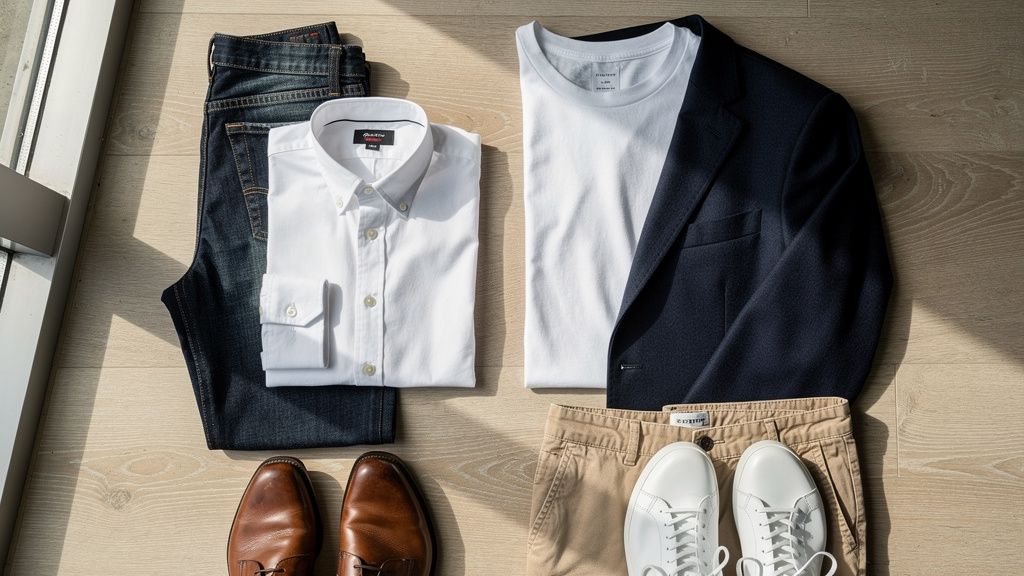
A crisp white Oxford button-down shirt ranks among the most versatile items a man can own. It dresses up with a blazer for meetings, pairs with jeans for smart-casual dinners, and layers comfortably under knitwear. The key is finding one with a proper fit through the shoulders and enough length to stay tucked. According to style experts at Gentleman's Gazette, a complete capsule wardrobe typically includes around 9 shirts as part of a 22-item core collection.
The plain white t-shirt deserves special attention as perhaps the single most worn item in a modern man's closet. Skip the flimsy multipacks and invest in structured, high-quality options with proper weight look for ringspun cotton that holds its shape after multiple washes. A well-fitted white tee works as a base layer, a standalone top for casual days, and even under a blazer for a relaxed yet polished aesthetic.
"A streamlined, trend-free wardrobe will save you time and money. The most stylish men are not always the ones with the biggest wardrobes they are the ones with the smartest ones."
Simon Chilvers, The Guardian
Types of Wardrobe Essentials by Category
Understanding the different categories of essentials helps you build strategically rather than accumulating random pieces. Each category serves a specific purpose in your overall wardrobe ecosystem.
Tops and Layers
The hierarchy of tops starts with your foundations and builds outward. Your white t-shirt collection should include at least three to five premium options in neutral colors. From there, add a neutral dress shirt in white or light blue for formal occasions and office wear. A casual shirt think Oxford cloth button-downs or textured linen options bridges the gap between casual and dressed up.
For layering, a crewneck sweater in merino wool or cashmere provides temperature regulation and adds visual interest to simple outfits. A lightweight hoodie or zip-up fleece offers casual warmth, while a more substantial knitwear piece handles colder months. According to GQ's 2026 wardrobe guide, the essential tops for a modern capsule include white t-shirts, casual shirts, neutral dress shirts, hoodies, and cashmere jumpers.
Bottoms and Denim
Well-fitted dark wash jeans form the backbone of casual bottoms look for a straight or slim leg that breaks just at the shoe without excessive bunching. Chinos in neutral tones like tan, navy, and olive provide smart-casual versatility that bridges to more formal territory. A pair of tailored dress trousers in charcoal or navy handles business and formal occasions.
The key with bottoms is ensuring proper fit through the thigh and knee, with a break that suits your height and preferred shoe style. Avoid the temptation to size down for a slimmer look tailored fit beats tight fit every time.
Outerwear and Footwear
A versatile blazer ideally in navy or charcoal transforms casual pieces into polished outfits. Single-breasted styles offer more everyday versatility, while a well-chosen double-breasted option adds impact for formal occasions. For outerwear, a mac or trench coat provides classic rain protection, while a peacoat or overcoat handles winter structure.
Footwear rotation should include dress leather shoes (oxfords or derbies for formal, loafers for smart-casual), clean white sneakers for casual days, and sturdy boots for colder months and more rugged occasions.
How to Build Your Capsule Wardrobe
Building a functional wardrobe follows a logical progression from foundation to finish. Start with your next-to-skin basics, add your bottom layers, then build outward with tops and layers, and finally complete the look with outerwear and accessories.
- Assess what you have: Pull everything out of your closet and honestly evaluate fit, condition, and how often you reach for each item.
- Fill gaps with foundations: Prioritize white t-shirts, well-fitted jeans, and a quality button-down before adding specialty pieces.
- Invest in versatility: Choose pieces in neutral colors that work with multiple other items in your closet.
- Focus on fit: A $50 shirt that fits perfectly beats a $200 shirt that doesn't. Budget for alterations.
- Build gradually: Add one or two quality pieces monthly rather than overwhelming yourself with a complete overhaul.
The goal isn't perfection on day one it's steady progress toward a closet where getting dressed feels effortless rather than frustrating.
Applications and Benefits
The practical advantage of owning proper men's wardrobe essentials extends beyond aesthetics into daily quality of life. When your closet contains pieces that work together, getting dressed takes less mental energy and fewer morning decisions.
Financial benefits emerge over time as well. A capsule approach emphasizes quality over quantity, meaning you buy fewer items but wear them more frequently. The cost-per-wear equation shifts dramatically in your favor when a single blazer serves dozens of different outfit combinations rather than sitting unworn after a single use.
Travel becomes simpler when your wardrobe is built around versatile pieces. A carry-on suitcase can hold everything needed for a weeklong trip when each item serves multiple purposes. This efficiency appeals particularly to frequent travelers and those who value minimalism without sacrificing style.
Environmental considerations matter too. The Guardian's capsule wardrobe guide notes that a streamlined, trend-free approach helps reduce fashion consumption while still maintaining personal style a meaningful benefit in an age of fast fashion waste.
Best Practices and Tips
Building and maintaining a quality wardrobe requires ongoing attention rather than a one-time shopping spree. These practices help you maximize value from your investments.
Color coordination matters more than specific trends. Stick to a cohesive palette typically neutrals like black, white, gray, navy, tan, and olive so everything in your closet works together. This eliminates the problem of having nice pieces that never get worn because nothing matches.
Fabric quality directly impacts longevity. Natural fibers like cotton, wool, linen, and leather age better than synthetic alternatives and often become more comfortable with wear. Budget accordingly, recognizing that higher initial investment often means lower long-term cost.
Proper care extends the life of everything you own. Follow care labels, invest in quality hangers, allow shoes to rest between wears, and address stains promptly. A $300 shirt ruined by improper washing represents false economy.
Regular closet audits seasonal or semi-annual keep your wardrobe aligned with your current life and body. Items that made sense at 25 may not fit your 35-year-old self, and that's perfectly acceptable. Rotate seasonally, storing off-season items properly to maintain their condition.
Common Mistakes and Misconceptions
Several persistent myths prevent men from building wardrobes that actually serve them. Addressing these misconceptions clears the path to smarter dressing.
The belief that more clothes equals better style leads to closets full of rarely-worn items while the same few favorites get constant rotation. Quality consistently beats quantity in wardrobes that actually function. A dozen well-chosen pieces outperform fifty random items.
Sizing confusion causes significant problems. Many men wear clothes that are too large, believing this is more comfortable or flattering. In reality, proper fit even if it feels slightly snug at first creates a more polished appearance and builds confidence. The adjustment period for wearing correctly fitted clothes is typically brief.
Trend obsession drives poor purchasing decisions. Chasing every seasonal novelty creates a closet that feels outdated within months. The most sophisticated personal style often appears almost timeless because it relies on classic pieces rather than trend-driven statements.
The assumption that quality wardrobe essentials require enormous budgets overlooks the reality that strategic shopping waiting for sales, choosing versatile pieces, focusing on items with high wear potential makes building a quality closet achievable at various price points. The real question isn't whether you can afford to dress well, but whether you're willing to be intentional about what you buy.
Comparison: Essential vs. Optional Pieces
Understanding the difference between essential foundation pieces and optional additions helps prioritize shopping decisions and budget allocation.
Core essentials form the foundation that supports your entire wardrobe. Optional pieces add personality and variety but shouldn't come at the expense of missing foundations. Build your core first, then add enhancements as budget and need dictate.
FAQs
How many items should be in a men's wardrobe essentials collection?
A functional capsule wardrobe typically contains between 25 and 40 items, depending on your lifestyle and climate. The Guardian's expert-guided collection recommends 22 core items as a starting point, while more comprehensive guides suggest 30-40 pieces for complete versatility. Start with the essentials and expand based on your specific needs.
What's the most important piece in a man's wardrobe?
The plain white t-shirt arguably serves as the most versatile foundation, working as a base layer, standalone top, and under-blazer option. However, a well-fitted Oxford button-down shirt runs a close second and arguably holds more importance for professional settings. The "most important" ultimately depends on your lifestyle demands.
How much should I spend on wardrobe essentials?
Quality essentials are worth investing in, but budget strategically. Prioritize items you wear frequently your white tees, daily socks, and foundational pants deserve higher quality and thus higher budget. Specialty items worn less often can come at lower price points. A reasonable annual budget for building essentials ranges from $500 to $1500 depending on starting point and goals.
Can I build a quality wardrobe on a tight budget?
How often should I replace wardrobe essentials?
Quality basics like t-shirts and underwear last 1-3 years with regular wear. Well-made shirts and trousers last 3-5 years or longer with proper care. Outerwear and shoes can last a decade or more with quality construction and maintenance. Replace items when they show wear, lose shape, or no longer fit not simply because trends change.
What's the difference between wardrobe essentials and capsule wardrobe?
A capsule wardrobe is a specific approach to building a minimal, versatile collection typically 30-40 items that all work together. Wardrobe essentials is a broader concept referring to the key pieces every man should own regardless of how many total items they have. Think of capsule as a methodology and essentials as the target list.
Key Takeaways
- Start with foundations: quality white t-shirts, well-fitted dark jeans, and Oxford button-downs form the backbone of any functional wardrobe.
- Prioritize fit over brand a $50 shirt that fits perfectly outperforms a $200 shirt that doesn't.
- Build around a cohesive color palette so everything in your closet works together.
- Invest in versatility: choose pieces that serve multiple purposes and work with other items you own.
- Quality over quantity fewer well-chosen items worn more often delivers better value than a closet full of rarely-worn clothes.
- Natural fibers like cotton, wool, and leather age better and often become more comfortable with wear.
- Regular closet audits keep your wardrobe aligned with your current life, body, and style needs.