How to Tuck in a Shirt: The Complete Guide to Every Style

How to Tuck in a Shirt: The Complete Guide to Every Style
There's a moment every man faces when getting dressed for a job interview, a wedding, or just a Thursday at the office: the tuck. Do you tuck or don't you? And if you do tuck, how exactly do you make it look effortless rather than like you're wearing a tablecloth? The difference between a sloppy, half-hearted tuck and a crisp, intentional one is the difference between looking like you threw on whatever was clean and looking like you actually gave a damn about your appearance.
This guide breaks down every tucking technique you need to know, when to use each one, and the common mistakes that ruin otherwise solid outfits. Whether you're wearing a button-up to a board meeting or a t-shirt to brunch, we've got you covered.
Understanding Shirt Types Before You Tuck
Before we get into the mechanics of tucking, you need to understand your shirt. Not every shirt is designed to be tucked, and forcing the wrong style will always look awkward.
The general rule is straightforward: shirts with a curved hem (the fabric that extends longer in the back and tapers up at the sides) are designed to be tucked. This is the hallmark of a dress shirt. Shirts with a straight hem think most polo shirts, casual button-ups, and tunics are meant to be worn untucked. Leave those loose or you'll create an awkward silhouette that makes your legs look shorter.
According to style guidance from Savile Row Co., "if it's a casual shirt with a straight hem, leave it hanging. If there's a curved hem with elongated tails, it's probably a dress shirt and should be tucked in." This simple distinction will save you from countless fashion faux pas.
The Three Main Tucking Techniques
There are three primary ways to tuck in a shirt, each creating a distinctly different look. Here's how they compare:
The Full Tuck: The Classic Approach
The full tuck is exactly what it sounds like you tuck the entire shirt into your waistband, all the way around. This is the most traditional method and works best with dress shirts and formal occasions.
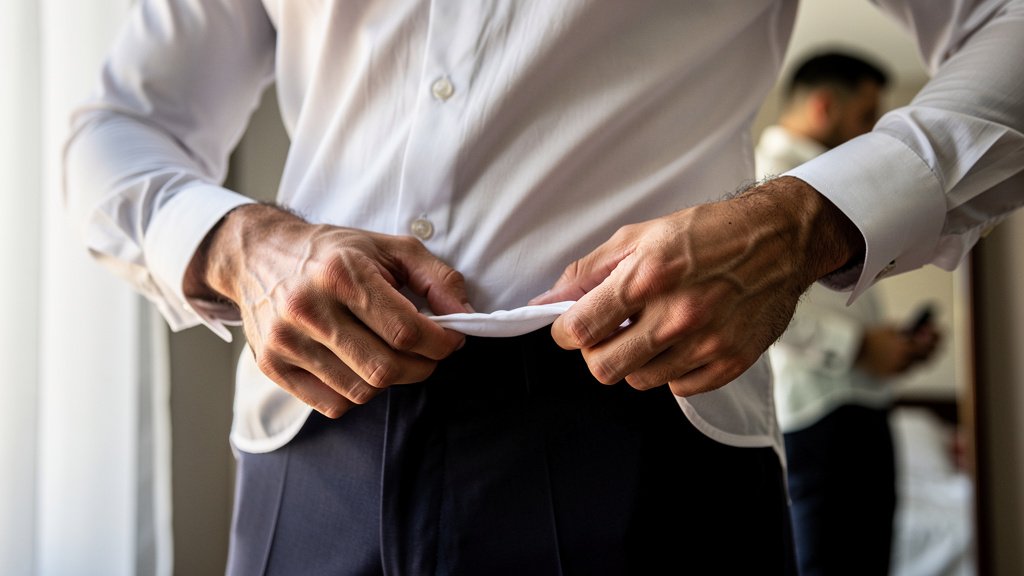
To execute a proper full tuck, start by buttoning your shirt completely. Put on your pants but leave them unbuttoned for now. Reach behind and pull the back of your shirt down so it's smooth against your lower back. Then tuck the front portion in, working from the center outward toward the sides. Finally, button your pants and smooth any creases or bulk.
The key to a polished full tuck is ensuring the fabric lies flat without bunching. As noted by menswear experts at SanVT, "allowing around 2-3 centimeters of fabric to sit slightly loose above the waistband creates the most balanced result." This slight looseness called blousing looks more natural than pulling everything tight as a drum.
The French Tuck: Effortless Cool
The French tuck (also called the half tuck or front tuck) has become the go-to technique for men who want to look put-together without trying too hard. popularized by style influencers and menswear experts alike, this technique involves tucking only the front center portion of your shirt while leaving the sides and back loose.
According to Sumissura's styling guide, "the French tuck is not decorative. It serves a clear functional purpose in styling: adjusting proportion, improving balance and subtly shaping the silhouette." It's particularly effective with boxy tops or oversized shirts that would otherwise hide your frame entirely.
To French tuck, simply gather a small section of the front hem (center or slightly off-center), tuck it into your waistband, and leave the rest loose. The result is a relaxed yet intentional look that works beautifully with jeans, chinos, and even tailored shorts.
The Military Tuck: The Anti-Billowing Solution
If you've ever spent an entire meeting tugging your shirt back into your pants, the military tuck is about to change your life. This technique was developed to keep dress shirts flat against the body all day, and it's particularly effective for men who struggle with excess fabric billowing out over their waistband.
Here's how it works: after you've done a basic full tuck, reach your fingers into the waistband along the side seams. Pinch the excess fabric on each side, fold it inward toward your back, and tuck it under the waistband. The fold creates small pleats that gather the fabric tight against your body, eliminating the puffiness that causes the dreaded muffin top.
Lifehacker describes it as "basically pinching the excess fabric at the side seams and folding it back when you tuck it in" an anti-billowing trick that's been used by military personnel and formal dressers for decades.
Step-by-Step: How to Execute a Military Tuck
- Put on your button-up shirt and button it fully. Leave your pants unbuttoned at the waist.
- Tuck the front of your shirt into your pants as you would with a normal full tuck.
- Reach into the waistband on one side and locate the side seam of your shirt.
- Pinch the excess fabric at the side seam between your thumb and forefinger.
- Fold that excess fabric inward (toward your back) and tuck it under the waistband.
- Repeat on the other side.
- Button your pants and check in a mirror adjust any uneven folds.
- Raise your arms slightly and check that no fabric has popped out.
The military tuck works best with shirts that have some excess fabric and pants with a slightly tighter waist. It's not ideal for very slim-fit pants where the extra fold would create visible bulk.
When to Tuck and When to Leave It Loose
Knowing when to tuck is just as important as knowing how. Here's a breakdown of common scenarios:
Always tuck: Dress shirts with curved hems, formal button-ups, any shirt when wearing a suit or blazer, when the occasion is formal or business-oriented.
Never tuck: Polos with flat hems, most t-shirts (unless you're going for a specific layered look), casual shirts worn with jeans or shorts as part of a relaxed outfit.
Depends on context: Untucked casual button-ups can work for smart-casual events, but only if the shirt is designed to be worn untucked. The Wardrobe Consultant notes that "with higher waists and wider pant profiles, shirt tucking is essential and not a half-tuck either, full, all-around tuck." Current fashion trends strongly favor tucked shirts with high-waisted bottoms.
Tips for Keeping Your Shirt Tucked All Day
Even with the perfect technique, some shirts just don't want to stay put. Here are the most effective strategies for preventing your shirt from escaping throughout the day:
- Invest in shirt stays (also called shirt garters) these elastic bands attach to your shirt tails and clip to your socks, keeping everything anchored.
- Choose the right shirt length: it should end around your mid-crotch when unbuttoned. Any shorter and it will inevitably pull free; any longer and you'll get fabric bunching at your thighs.
- Ensure your pants fit properly pants that are too tight will push the fabric out, while too-loose waists offer no resistance.
- Consider the underwear tuck trick for casual situations tucking your shirt into your underwear before putting on pants can help anchor it in place.
- For t-shirts specifically, Real Men Real Style recommends "keeping it simple" with solid colors and ensuring a relaxed (but not loose) fit, as tight t-shirts will accentuate every contour of your torso.
Common Mistakes to Avoid
The biggest mistake most men make is forcing a tuck on a shirt that wasn't designed for it. If the hem is straight, let it hang. The second biggest mistake is creating a muffin top that unsightly bulge of fabric that spills over the waistband. The military tuck solves this, but so does simply ensuring your shirt fits properly through the torso.
Another frequent issue is uneven tucking where one side is pulled tighter than the other. This is usually solved by tucking from the back first, then working to the front, smoothing as you go.
Finally, avoid over-tucking in casual settings. A French tuck is meant to look relaxed; a full military tuck with a blazer at brunch reads as overdressed. Match your tucking technique to the occasion.
"A precisely tucked shirt isn't just about looking good it's about confidence, professionalism, and respect for the occasion."
Bewakoof Style Guide
Frequently Asked Questions
Can I tuck in a t-shirt?
Yes, you can tuck in a t-shirt, but it requires following specific rules. The t-shirt should fit loosely (not tight), be a solid color or simple pattern, and work best when layered under a jacket or cardigan. Tucking a t-shirt without any layering often looks overly formal or dated.
Why does my shirt keep coming untucked?
Your shirt is likely either too short or your pants fit poorly. Shirt stays can help anchor it, but the better solution is ensuring your shirt has enough length to stay securely in your waistband. A shirt that ends at mid-crotch gives you enough fabric to anchor properly.
What is the French tuck and when should I use it?
The French tuck involves tucking only the front center portion of your shirt while leaving the sides and back loose. Use it when you want to define your waistline without the formality of a full tuck perfect for casual Fridays, date nights, or styling oversized shirts.
How do I prevent the muffin top effect when tucking?
The military tuck is the most effective solution it folds excess fabric at the sides inward, creating a flat surface. You can also try tucking your shirt into underwear before putting on pants, which adds an extra anchor point.
Should I tuck in my polo shirt?
No polo shirts are designed with a straight hem specifically to be worn untucked. Tucking a polo creates an awkward silhouette and goes against the garment's intended design.
What's the difference between a full tuck and a military tuck?
A full tuck simply tucks all the fabric into the waistband. A military tuck goes a step further by folding and pleating the excess fabric at the sides, creating a smoother, more streamlined appearance that stays tucked longer.
Key Takeaways
- Shirts with curved hems are designed to be tucked; straight-hem shirts should be left loose.
- The full tuck is the classic choice for formal occasions and dress shirts.
- The French tuck offers a relaxed, intentional look that's perfect for smart-casual settings.
- The military tuck prevents billowing and keeps your shirt flat all day.
- Allow 2-3 centimeters of fabric to blouse slightly above the waistband for a natural look.
- Match your tucking technique to the formality of the occasion over-tucking is as bad as under-tucking.
- Invest in shirt stays if you struggle with shirts coming loose throughout the day.