Halloween Decoration Ideas: From DIY Projects to the Giant Skeleton Craze

Halloween Decoration Ideas: From DIY Projects to the Giant Skeleton Craze
Americans are expected to spend $4.2 billion on Halloween decorations in 2025, according to the National Retail Federation—a number that's grown 31.3% faster than overall Halloween spending since 2019. That's not a typo. Decorations are now outpacing candy, costumes, and greeting cards in growth rate, which tells you something about how seriously people take their front yard graveyards and porch displays.
If you're looking for Halloween decoration ideas that actually make an impact without requiring a second mortgage, you're in the right place. I've spent weeks digging through trend reports, DIY tutorials, and the somewhat unhinged corners of Reddit where people debate the merits of fog machines at 2 a.m., and what follows is everything worth knowing about decorating for the season.
The Giant Skeleton Changed Everything
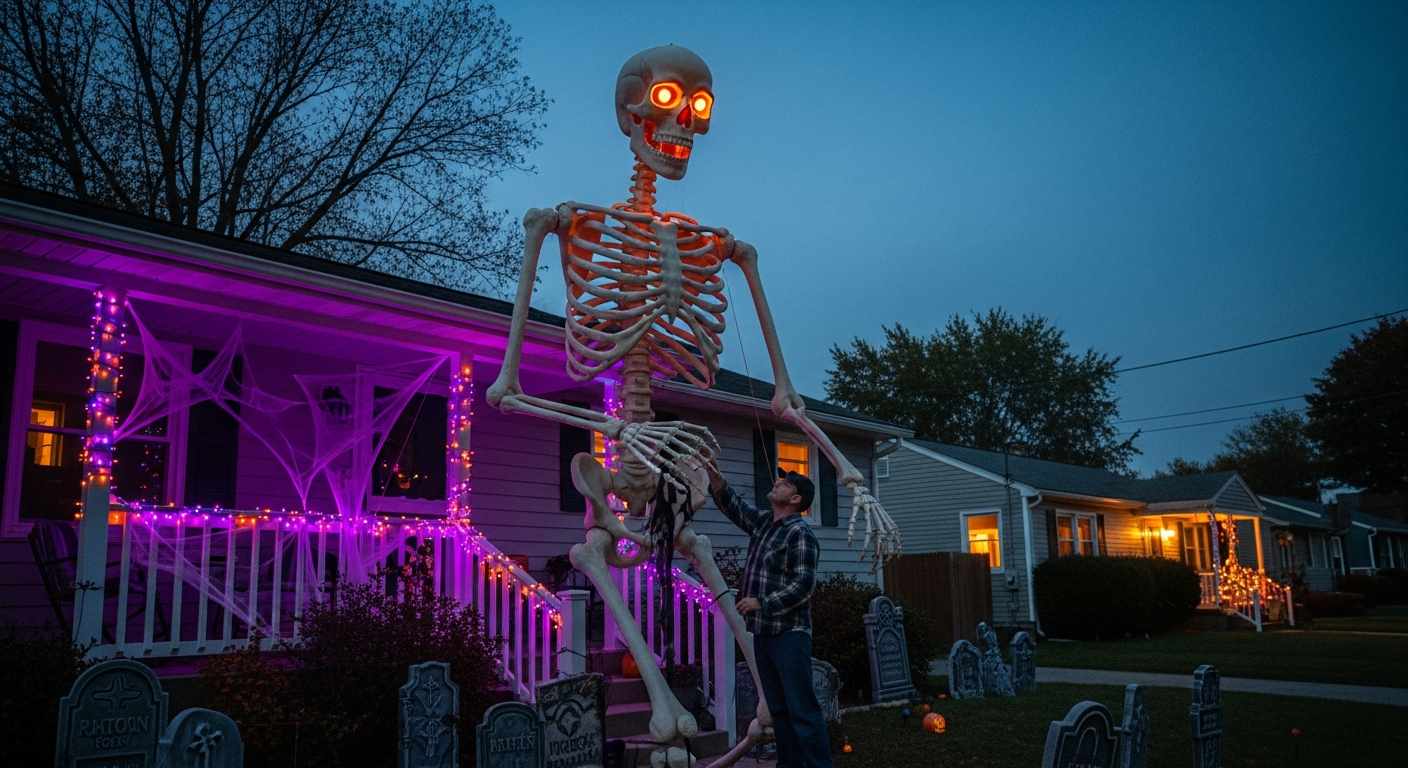
You can't talk about Halloween decorations in 2025 without addressing the 12-foot elephant—or rather, skeleton—in the room. Home Depot's giant skeleton, affectionately dubbed "Skelly" by its devoted fanbase, has sold out every single year since its 2020 debut. At $299, it's not cheap, but that hasn't stopped it from becoming the most viral Halloween decoration of the decade. Lance Allen, the Home Depot merchant who helped develop the product, put it simply when describing his neighbors' reactions: "The 12-foot skeleton last year had to be their all-time favorite."
The skeleton's success spawned an entire category. Costco now sells competing giants. Lowe's has entered the oversized decoration arms race. And homeowners who missed the initial Skelly drops have been spotted paying $500 or more on eBay—an absurd markup that is, unfortunately, completely in line with how secondary markets behave around sold-out seasonal items. The cultural impact extends beyond the decoration itself—Ali Spagnola reportedly spent $800 and 70+ hours covering her 12-foot skeleton in disco ball mirrors, a project that went viral and inspired countless imitations.
What the giant skeleton trend really represents is a shift in how people approach outdoor Halloween decorating. The goal isn't subtle anymore. It's theatrical. People want their houses to be destinations, and a 12-foot skeleton with LED eyes that can display hearts, stars, or dragons delivers that in a way that a few carved pumpkins simply cannot.
DIY Halloween Decorations That Don't Look Homemade
Not everyone has $299 to drop on a single decoration, and honestly, some of the most impressive Halloween displays I've seen cost almost nothing. The key is choosing projects that punch above their weight visually while requiring minimal actual skill.
Floating witch hats remain one of the best bang-for-your-buck outdoor decorations. You need black witch hats (dollar stores sell them for $1-2 each), fishing line, and small LED tea lights. Hang them from porch ceilings or tree branches at varying heights, and at night they create an genuinely eerie floating effect that photographs beautifully. Total cost for a display of six to eight hats runs about $15-20, and the setup takes maybe 30 minutes.
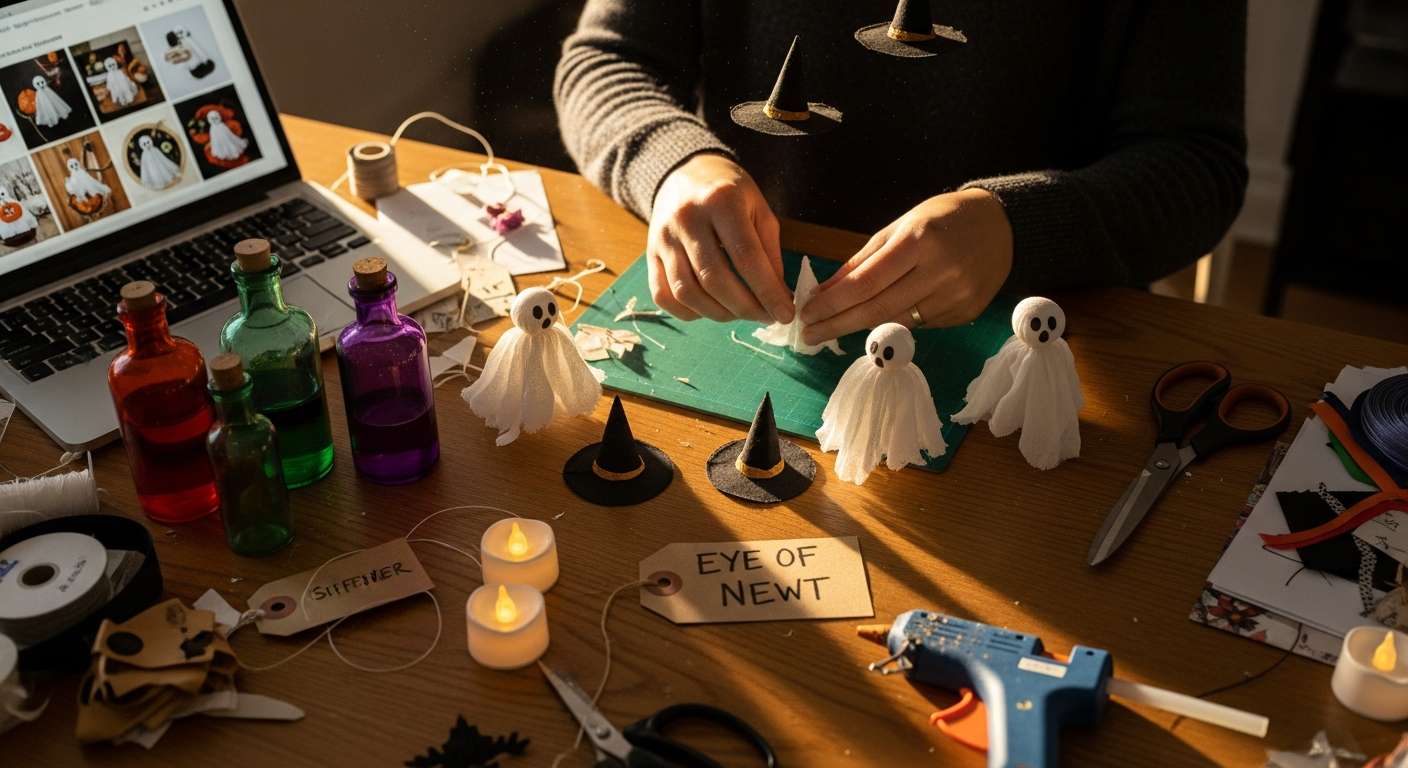
Cheesecloth ghosts are another classic that works because the material naturally drapes in creepy, organic ways that plastic decorations can't replicate. Soak cheesecloth in a mixture of water and fabric stiffener, drape it over a balloon or wire frame, let it dry overnight, and you've got ghostly figures that move in the wind. The texture catches light differently than manufactured decorations, which is why these often look better in photos than items costing ten times as much.
For indoor spaces, the "apothecary shelf" approach has gained traction—collecting vintage-looking bottles and jars, filling them with colored water or dried herbs, and labeling them with handwritten tags like "Eye of Newt" or "Essence of Nightshade." It's essentially playing dress-up with your kitchen shelves, but the effect is genuinely atmospheric and costs whatever you're willing to spend at thrift stores. I've seen impressive versions assembled for under $25.
What's Actually Trending This Year
The "Summerween" phenomenon has fundamentally changed when people start decorating. According to RetailNext, 47% of shoppers now begin their Halloween shopping before October, compared to just 32% a decade ago. Retailers have responded by launching Halloween collections in July and August, so the best selection—and the viral items that sell out—are often gone by mid-September.
Aesthetic-wise, 2025 is seeing a split between two camps. The maximalist crowd is going bigger and more theatrical than ever, stacking multiple animatronics, fog machines, and synchronized light displays. Meanwhile, a growing contingent is embracing what design blogs are calling "elevated Halloween"—think black velvet pumpkins, brass candlesticks, dried florals in moody colors, and decorations that could plausibly stay up through Thanksgiving. Neither approach is wrong; they're just serving different purposes—a neighborhood spectacle on one end, Instagram-worthy interiors that don't scream "Party City" on the other.
Sustainability is entering the conversation too, though reliable data on what percentage of Halloween decorators actually prioritize eco-friendly options versus just saying they do in surveys proved difficult to find. What is clear is that reusable decorations are getting more attention, and the "buy once, use for years" mentality is gaining ground, partly because decoration spending has climbed so much that people are treating these purchases as investments rather than disposable seasonal items.
Outdoor Decoration Ideas That Actually Work
Front porches are where most Halloween decorating happens, and the most effective displays share a few characteristics: they're layered, they incorporate lighting, and they create a sense of progression as visitors approach the door. A single wreath on the door isn't a display; it's an afterthought.
Start with the ground level. Pumpkins—real or artificial—clustered in odd numbers (three, five, seven) create visual interest. Mix sizes and colors if you're going the artificial route; the monochrome white or black pumpkin trend from a few years ago is giving way to more varied palettes. Add height with cornstalks, hay bales, or those tall decorative grass bundles that garden centers sell in fall. This base layer should be visible during daylight hours and establish your color story.
Mid-level decorations—things at eye height or slightly above—are where character comes in. This is your skeleton in a rocking chair, your witch cauldron setup, your hanging bats or spider webs. The mistake people make is crowding this zone. Pick one or two focal points and let them breathe. A single well-positioned animated decoration beats six static ones competing for attention.
Lighting transforms everything after dark. String lights in orange or purple are fine but predictable. More interesting options include uplighting trees or bushes with green or red spotlights (creates an instant haunted forest effect), battery-operated candles in hurricane lanterns lining walkways, or the increasingly popular projection systems that cast moving images—ghosts, bats, swirling patterns—onto your house's exterior. The projection approach is particularly effective for renters or anyone who can't permanently install decorations.
Indoor Decorations Beyond the Obvious
Living rooms and entryways get most of the attention, but kitchens and bathrooms offer underutilized decorating real estate.
In kitchens, the apothecary aesthetic I mentioned earlier works beautifully, but so does simply swapping out everyday items for Halloween versions. Black dish towels. A skeleton hand holding your utensils. A cake stand displaying decorative pumpkins or a cloche covering a fake crow. None of these touches require rearranging your entire space, yet they make it clear that someone in this house takes the holiday seriously.
Bathrooms are where you can get genuinely weird without committing to a whole-house theme. A bloody handprint shower curtain. Eyeball soaps. A mirror with "HELP ME" written in what appears to be dripping blood (washable window markers work perfectly for this). Guests using your bathroom during a Halloween party will remember these details precisely because they're unexpected.
For living spaces, the current trend leans toward creating vignettes rather than scattering decorations randomly. A mantel display with layered candles, a vintage mirror, dried branches, and a few well-chosen spooky accents reads as intentional. The same items spread across three different surfaces reads as cluttered. Good Housekeeping's decorating guides emphasize this point repeatedly: grouping creates impact, scattering dilutes it.
Budget Breakdown: What Things Actually Cost
The average American household budgeted $36.85 for Halloween decorations in 2024, according to Capital One Shopping research. That number is climbing, but it's still the baseline most people are working with. Here's roughly what that gets you:
- Dollar store haul (spider webs, plastic spiders, window clings, LED candles): $15-25 for a respectable starter kit
- Mid-range animatronic (motion-activated, sound-producing): $40-80 at big-box retailers
- Quality artificial pumpkins that don't look plastic: $8-15 each, or $30-50 for a set
- Fog machine (entry-level): $25-40, plus ongoing fluid costs
- Home Depot's 12-foot skeleton: $299, if you can get one
- Professional-grade animated props: $150-400+, typically purchased by the truly obsessed
The 78% of consumers planning to buy decorations this year, per NRF data, are splitting their spending across these tiers. Most households mix a few new purchases with decorations accumulated over previous years, which is why the "buy quality, reuse annually" approach makes financial sense even if the upfront cost stings.
Open Questions the Data Doesn't Answer
A few questions came up during research that available data couldn't answer. How much does elaborate Halloween decorating actually affect property values or neighborhood dynamics? Real estate agents occasionally claim it helps, but no rigorous studies appear to exist. The environmental impact of all this plastic and electronic decoration is similarly murky—the sustainability conversation is happening, but hard numbers on landfill contribution from Halloween specifically aren't being publicized. Perhaps most telling for the industry would be knowing how many giant skeleton purchases are first-time buyers versus repeat customers upgrading or replacing; Home Depot doesn't break this out publicly, and it would say a lot about whether the trend has staying power or is approaching saturation.
Making Your Halloween Decorations Work Harder
PwC's 2025 Halloween report noted that the holiday "has emerged as kind of a litmus test for how people prioritize joy even when money's tight." That framing resonates. Decorating isn't just about impressing neighbors or racking up Instagram likes—though those motivations certainly exist. For many households, the ritual of transforming a home for Halloween is the point. The decorations are props in a larger performance of seasonal celebration.
The most effective Halloween decoration ideas create atmosphere rather than just occupying space. A fog machine matters more than a dozen static props, and lighting can transform cheap decorations into something genuinely cinematic. Thoughtful placement beats sheer volume—a lesson that applies whether you're working with a $30 budget or a $300 one.
And if you're still hunting for that 12-foot skeleton? Set your alarm for next July, because that's apparently when the Halloween shopping season starts now, and the early bird gets the giant anatomically-correct lawn ornament.