What to Wear to a 90s Party as a Black Woman: Outfit Ideas Rooted in the Real Decade
What to Wear to a 90s Party as a Black Woman: Outfit Ideas Rooted in the Real Decade
If you're figuring out what to wear to a 90s party as a Black woman, the good news is that you're drawing from one of the richest fashion decades in recent history and one that Black women largely built. The harder part is deciding which version of the '90s you want to represent, because there were several, and they looked nothing alike.
The decade ran from TLC's neon-and-denim early era all the way through Aaliyah's sleek, body-conscious late-90s aesthetic. Mary J. Blige was wearing Timberlands and oversized blazers while Destiny's Child was coordinating matching sets on red carpets. Foxy Brown was in fur and diamonds, and Da Brat was in baggy everything from head to toe. These weren't just different personal styles they reflected genuinely different subcultures within Black fashion that coexisted and sometimes clashed throughout the decade.
The mistake most 90s party guides make is treating the era as one monolithic aesthetic. It wasn't. Choosing a lane matters if you want to look intentional rather than like a Halloween costume.
The Hip-Hop Lane: Baggy, Bold, and Brand-Conscious
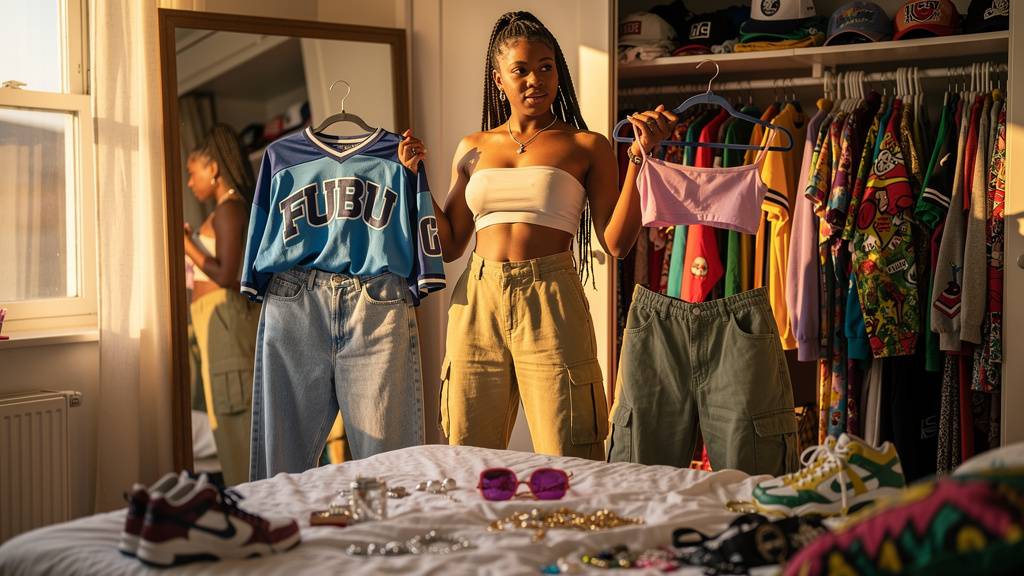
This is the aesthetic most people picture when they think about 90s Black party fashion, and it's the one with the most room to play. The hip-hop lane in the early-to-mid '90s was defined by volume oversized everything, from FUBU jerseys and Cross Colours graphic tees to wide-leg jeans and bomber jackets. Cross Colours, the Los Angeles-based label founded in 1989 by Carl Jones and TJ Walker, became one of the most visible symbols of Black street fashion in the early decade, worn by everyone from TLC to Mary J. Blige. The brand's Pan-African color palette red, black, and green showed up in African medallion jewelry and kente-printed accessories that were common at parties and in music videos throughout 1991 to 1994.
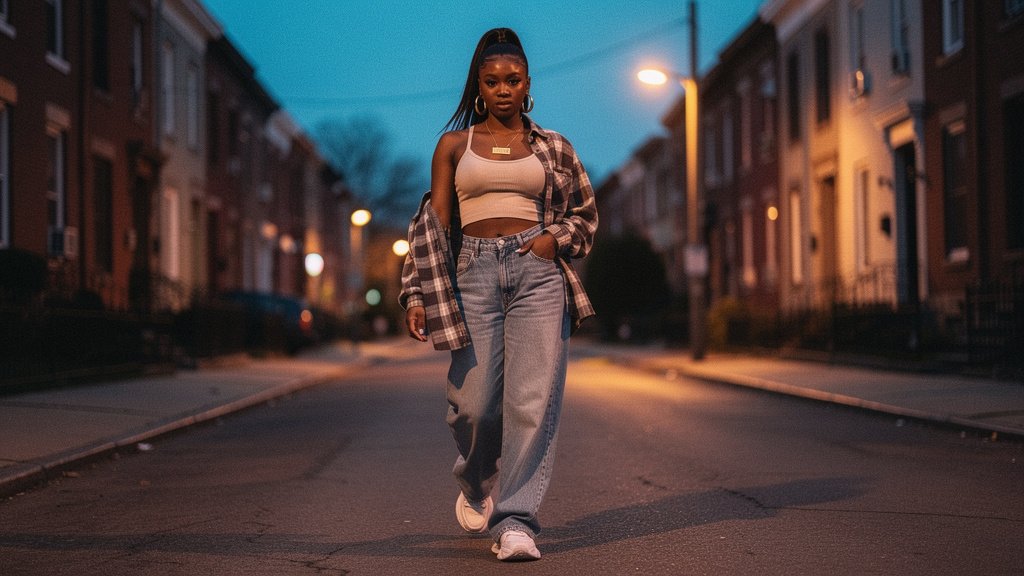
For a party look rooted in this moment, the formula is straightforward: high-waisted or wide-leg jeans (dark wash or acid wash both work), a cropped or oversized graphic tee, and a pair of chunky sneakers Nike Air Max 95s, Reebok Classics, or Timberlands if you want to go full Mary J. Layer a leather bomber or an oversized flannel shirt over the top, tied at the waist if you want to break up the silhouette. A fitted snapback or a bucket hat pulled low reads instantly as the era. Gold hoop earrings the bigger the better were non-negotiable in this lane, and a nameplate necklace or a thick chain finishes the look without overdoing it.
FUBU (For Us By Us), founded in 1992 by Daymond John in Queens, New York, was another cornerstone brand of the era, and a FUBU jersey or rugby shirt over a turtleneck is one of the most period-accurate choices you can make. The brand reportedly generated $350 million in revenue by 1998, which gives you a sense of how deeply embedded it was in the culture this wasn't niche streetwear, it was mainstream Black fashion.
The R&B Lane: Aaliyah, Crop Tops, and the Midriff Moment
By 1994, when Aaliyah released her debut album Age Ain't Nothing But a Number, a different visual language was emerging in Black R&B. It was still casual and street-influenced, but the silhouettes were shifting tighter through the body, with strategic exposure. Aaliyah's signature look, developed in collaboration with stylist Derek Lee, centered on low-slung baggy pants or cargo trousers worn with a cropped bandeau or sports bra, layered with an open button-down or oversized jacket. The exposed midriff was the anchor of the whole thing.
In 1996, Aaliyah was chosen for Tommy Hilfiger's Tommy Jeans campaign, wearing a tube top with a visible Tommy Hilfiger-branded waistband a moment that crystallized how R&B artists were bridging streetwear and mainstream fashion. If you want to channel this look for a party, the components are: low-rise or hip-slung wide-leg trousers, a cropped ribbed tank or bandeau, an unbuttoned flannel or sheer blouse over the top, and a pair of chunky lug-sole boots or classic Timberlands. Wrap a bandana around your wrist or tie it in your hair. Keep the makeup clean Aaliyah's look was always about the clothes, not a full glam beat.
TLC occupied a slightly different corner of this lane. Lisa "Left Eye" Lopes, T-Boz, and Chilli built their look around oversized sportswear baseball caps, baggy overalls worn with one strap undone, brightly colored windbreakers, and combat boots. Their 1992 debut era was more playful and louder in color than Aaliyah's cooler, darker palette. If you're going TLC rather than Aaliyah, lean into the neon, add a sports jersey, and consider the iconic one-strap overalls with a crop top underneath it's one of the most recognizable silhouettes of the whole decade and still photographs beautifully.
The Dressed-Up Lane: Club Wear and the Velvet Moment
Not every Black woman in the '90s was in baggy jeans. There was a whole parallel universe of dressed-up party fashion happening in the same decade the kind you'd see in Boomerang (1992) or on the set of Living Single. The BuzzFeed writer Shaylah Brown described the fashion in Boomerang as "absolutely impeccable," and she's right the film is essentially a lookbook for the polished, corporate-meets-nightlife aesthetic that Black professional women were wearing in the early '90s.
This lane means bodycon dresses in jewel tones, wrap dresses with bold prints, or a velvet slip dress in deep burgundy, forest green, or midnight blue. Velvet was everywhere in the mid-to-late '90s not just as a texture but as a statement about luxury and sensuality. Pair a velvet midi dress with strappy heeled sandals or a pointed-toe mule, add a choker (the thin black velvet ribbon style is the most period-accurate), and finish with gold hoops and a small structured bag. This is the look for someone who wants to be dressed up without going full costume, and it holds up well in 2025 without tipping into the territory of a themed party store clearance rack.
Hair and Accessories: Where the Decade Lives
The outfit is only half the job. In the '90s, Black women's hair and accessories were doing as much cultural work as the clothes sometimes more. Box braids, popularized in part by Janet Jackson's iconic Poetic Justice look in 1993, were everywhere throughout the decade, and they're a natural choice for a party look that reads immediately as the era. Finger waves the sleek, sculpted style worn by Aaliyah, Brandy, and countless others are another strong option if you want something more polished. A high puff or a pineapple updo with a colorful scrunchie works for the more casual hip-hop lane.
On accessories: the '90s were not subtle. Thick bamboo earrings, nameplate necklaces, African medallions on thick rope chains, jelly bracelets stacked up the arm, and plastic butterfly clips in the hair were all in rotation simultaneously. Sunglasses were oversized and often tinted amber, brown, or the tiny oval frames that Aaliyah made iconic. Finishing with a bucket bag or a small backpack in a bold color pulls the whole thing together rather than leaving the accessories feeling like an afterthought.
What Actually Makes This Look Land at a Party
At 90s-themed parties, the people who look best are consistently the ones who committed to a specific reference point rather than mixing aesthetics from across the decade. Combining Aaliyah's midriff-baring R&B look with TLC's neon windbreaker energy and a velvet choker from the club scene doesn't create a coherent '90s look it creates a confused one. Choose a lane, narrow it down to an era within that lane (early '90s hip-hop reads differently from late '90s R&B), and dress the whole look top to bottom with that reference in mind.
This is a decade where Black women were the originators, not the borrowers. As the Elle UK piece on fashion and Black cultural influence put it, "If you examine any mainstream fashion trend closely enough, nine times out of ten you will find at least three prominent Black women who did it first." Dressing for a 90s party as a Black woman isn't about recreating someone else's nostalgia it's about honoring a decade your culture actually shaped.
Regional variation in 90s Black party fashion is genuinely hard to pin down the Atlanta club scene, the Houston aesthetic, and the New York hip-hop look were all distinct, but detailed documentation of those differences is scattered and largely absent from fashion writing that tends to flatten everything into a single coastal narrative. If your family or community was rooted in a specific city's scene, leaning into that regional specificity will make your look more personal and more accurate than any generic guide can get you.
Quick Reference: Outfit Blueprints by Vibe
These aren't rigid rules treat them as starting points to adjust based on what you already own or can thrift:
- Early-90s hip-hop: Wide-leg or acid-wash jeans + oversized Cross Colours or FUBU graphic tee + leather bomber + chunky sneakers (Air Max, Reeboks) + gold hoops + snapback or bucket hat
- Aaliyah R&B (mid-to-late 90s): Low-slung baggy trousers or cargo pants + cropped bandeau or sports bra + open flannel or sheer blouse + Timberlands or lug-sole boots + small oval sunglasses + bandana at wrist or in hair
- TLC early era: Overalls with one strap undone + bright crop top underneath + baseball cap + high-top sneakers + stacked jelly bracelets + bold color blocking throughout
- Dressed-up club look: Velvet bodycon or midi dress in a deep jewel tone + strappy heeled sandals + thin velvet choker + gold hoops + small structured bag
- Mary J. Blige-era street glam: Oversized blazer or leather jacket + fitted turtleneck + wide-leg or straight-leg jeans + Timberlands + nameplate necklace + bold lip in a deep berry or brown shade
Thrifting is genuinely your best friend here Goodwill, Depop, and local vintage shops will have the actual pieces from the decade, not the fast-fashion approximations that read as costume rather than tribute. The fabrics were different, the fits were different, and the real thing always photographs better than the replica.