When to Wear Stockings with a Dress: A Practical Style Guide

When to Wear Stockings with a Dress: A Practical Style Guide
The question of when to wear stockings with a dress used to have a simple answer: always. Your grandmother probably owned a drawer full of nude pantyhose and wouldn't dream of leaving the house with bare legs under a skirt. That era is over, but the confusion it left behind isn't. Women now face a more complicated calculation one that involves dress codes, temperature, leg confidence, shoe choices, and whether the occasion calls for polish or ease. The old rules are dead, but nobody quite agreed on what replaced them.
I've spent years covering fashion and watching this particular debate cycle through trend pieces every autumn. Stockings are neither mandatory nor outdated they're a styling tool, and like any tool, they work better in some situations than others. What follows is a practical breakdown of when hosiery elevates an outfit, when it's unnecessary, and how to choose the right type when you do reach for a pair.
Formal Events: When Stockings Still Make Sense with a Dress
Black-tie events, galas, and formal weddings remain the strongest case for wearing hosiery. According to Generation Tux's formal attire guide, traditional dress codes like White Tie and Black Tie historically expected women to wear sheer stockings with floor-length gowns. That expectation has softened considerably bare legs are now acceptable even at most formal events but stockings still serve a purpose when you want a polished, finished look or when the venue runs cold. A January wedding in a drafty ballroom is a different calculation than a summer garden party.
The etiquette question comes up constantly in fashion forums. One Reddit thread in r/PetiteFashionAdvice captured the generational divide perfectly: "Some say it's proper etiquette to wear pantyhose with a formal dress (how I was raised) and others say it's old fashioned." Both camps are technically correct. Traditional etiquette did require hosiery; contemporary practice has relaxed that standard. What matters now is whether stockings serve your outfit and comfort, not whether Emily Post would approve.
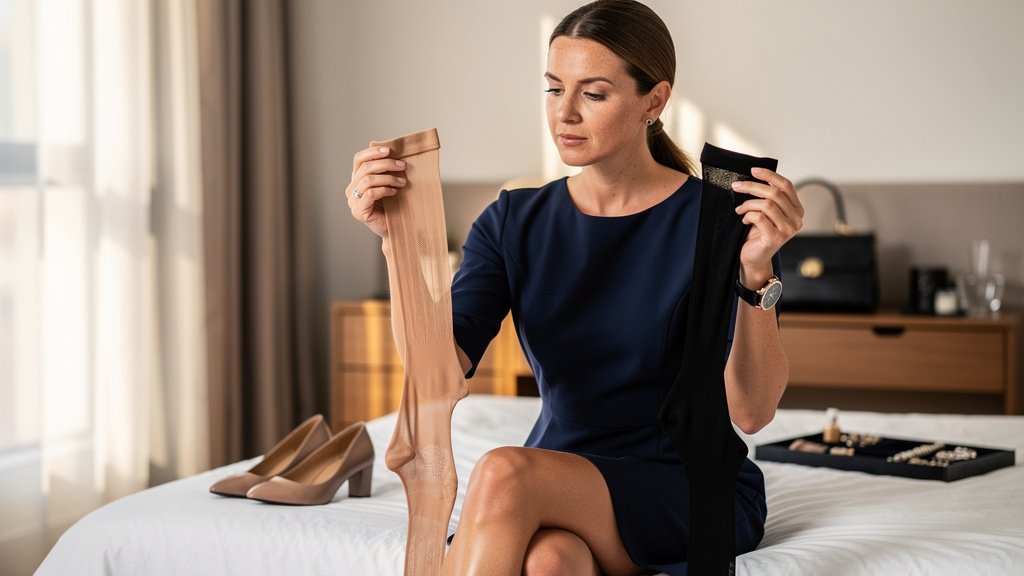
For formal occasions, sheer nude hosiery in a shade that matches your skin tone remains the classic choice. The goal is a subtle smoothing effect evening out skin tone, adding a slight sheen under evening lighting without drawing attention to the hosiery itself. Black sheer tights can work with certain cocktail dresses, particularly shorter hemlines paired with heels, but they read as more fashion-forward than traditionally formal.
The Temperature Question
Weather is the most practical reason to wear stockings with a dress, and it's the one that requires the least justification. When temperatures drop below 50°F, tights transform from an aesthetic choice into a functional layer that lets you keep wearing dresses through fall and winter instead of defaulting to pants for four months.
According to Glamour's 2025 tights trends coverage, "when temperatures drop, the season's top tights trends are indispensable outfit saviors. Whether they just peek out between a midi-dress and knee-high boots or are the star of the look with a miniskirt, the best tights can be an equally practical and stylish accessory for cold weather." The global hosiery market reflects this seasonal reality: valued at USD 42.4 billion in 2024 according to Grand View Research, the industry continues to grow at roughly 2.9% annually, driven largely by cold-weather demand.
Opaque tights those with a denier of 40 or higher provide the most warmth. The Focus on Style guide notes that heavier tights work best with shorter hemlines: "The shorter your skirt, the darker and more matte your tights look best." This isn't just an aesthetic preference; the visual weight of opaque tights balances the exposed leg area, while sheer stockings can look oddly formal or dated with a mini dress.
Professional Settings: When to Wear Stockings with a Work Dress
Office dress codes vary so dramatically that any blanket advice here comes with asterisks. A corporate law firm in Manhattan operates under different norms than a tech startup in Austin. But some general principles hold.
Sheer nude hosiery remains standard in conservative industries finance, law, politics particularly for client-facing roles or formal presentations. The expectation isn't universal, and plenty of women in these fields go bare-legged without consequence, but stockings remain a safe default when you're uncertain about office culture or meeting with external stakeholders. The Dressing Well fashion guide puts it plainly: "While many younger women can easily carry off a non-hosiery look with skirts and dresses in the warmer months in both professional and personal settings, many of us on the flip side of 40 need to adjust our strategy." That's a diplomatic way of acknowledging that visible veins, uneven skin tone, or simply preferring the look of hosiery are all valid reasons to wear them.
In creative industries and casual offices, the calculation flips. Stockings can read as overly formal or out of touch with the workplace culture. I've interviewed stylists who specifically advise against nude pantyhose in these settings, arguing they signal a misunderstanding of the dress code. Black opaque tights, by contrast, often work in creative environments because they function more like a fashion choice than a formality.
Sheer vs. Opaque: Matching Tights to Your Dress
The type of hosiery matters as much as the decision to wear it. Sheer stockings and opaque tights create entirely different effects, and choosing the wrong weight for your outfit can undermine the whole look.
Sheer hosiery typically 10 to 20 denier creates a subtle, polished effect. It smooths skin tone without adding significant visual weight to your legs. Sheer stockings work best with:
- Knee-length or midi dresses in lightweight fabrics
- Formal and semi-formal occasions where you want a refined finish
- Nude or skin-tone shades when the goal is invisible coverage
- Black sheer tights for cocktail dresses and evening events
- Office settings where visible hosiery would seem too casual
Opaque tights 40 denier and above make a stronger visual statement. As Cosmopolitan's styling guide notes, black tights in particular are "a neutral piece that you can style with practically anything. From opaque to sheer, fishnet, and patterned, black tights are a wardrobe staple." Opaque tights pair well with shorter hemlines, heavier fabrics like wool or tweed, and casual-to-smart-casual occasions. They also provide genuine warmth, which sheer stockings don't.
The Focus on Style principle bears repeating: "The length of your skirt is the best gauge for how heavy or sheer your hose should be." A floor-length gown calls for sheer (if anything); a mini dress in winter calls for opaque. Midi lengths offer the most flexibility you can go either direction depending on the occasion and your preference.
When Bare Legs Work Better
Not every dress needs stockings, and forcing them into an outfit that doesn't call for them can look worse than going without.
Summer events, beach weddings, and outdoor gatherings in warm weather are the clearest cases for bare legs. Sheer stockings in 90-degree heat serve no functional purpose and can feel performatively formal. The Dressing Well guide acknowledges this reality: "It's perfectly fine to go bare-legged when it's too hot and stuffy for hosiery. You'll feel more comfortable and cool that way."
Certain dress styles also look better without hosiery. Maxi dresses and ankle-length skirts rarely benefit from stockings the hemline already covers most of your leg, so the hosiery serves little purpose. Casual sundresses, linen shifts, and beach-adjacent styles read as overdressed with pantyhose. Strappy sandals and most flat sandals look strange with visible hosiery; the combination signals a mismatch between the formality of your footwear and your legwear.
Self-tanner offers a middle path for women who want some coverage without the feel of stockings. A light application evens skin tone and adds warmth without the constriction of hosiery. This works particularly well for summer weddings and outdoor events where bare legs are appropriate but you'd prefer not to show every vein and blemish.
Shoe Pairings That Change the Calculation
Your shoe choice often dictates whether stockings make sense.
Closed-toe pumps and heels work with both sheer and opaque hosiery. This is the classic combination stockings were designed with these shoes in mind, and the pairing holds up as well as it ever did. Ankle boots and knee-high boots also pair naturally with tights, particularly opaque styles that create a continuous line from hem to boot top.
Open-toe shoes complicate things. Traditional etiquette held that visible toes through hosiery were a faux pas, but that rule has largely collapsed. Sheer stockings with open-toe heels are now common at formal events, though the combination still divides opinion. Sandal-toe or toeless pantyhose exist specifically for this purpose, though they've never quite caught on as a mainstream solution. My honest take: if you're wearing open-toe shoes in warm weather, bare legs usually look cleaner than stockings. In cold weather, closed-toe shoes make more sense anyway.
Sneakers and casual flats generally don't pair with traditional hosiery. Athletic-inspired dresses worn with white sneakers a common street-style combination look odd with nude pantyhose. Black tights can work with certain sneaker-and-dress combinations, but it's a deliberate fashion choice rather than a default.
Color Matching Beyond Nude and Black
The nude-or-black binary dominates most hosiery discussions, but colored and patterned tights have their place. Glamour's trend coverage highlights "semi-sheer pastel tights" and notes that "faded shades of pistachio green, baby pink, and icy blue give an outfit an otherworldly touch." These work best as intentional fashion statements rather than functional legwear you're drawing attention to your tights rather than using them as invisible coverage.
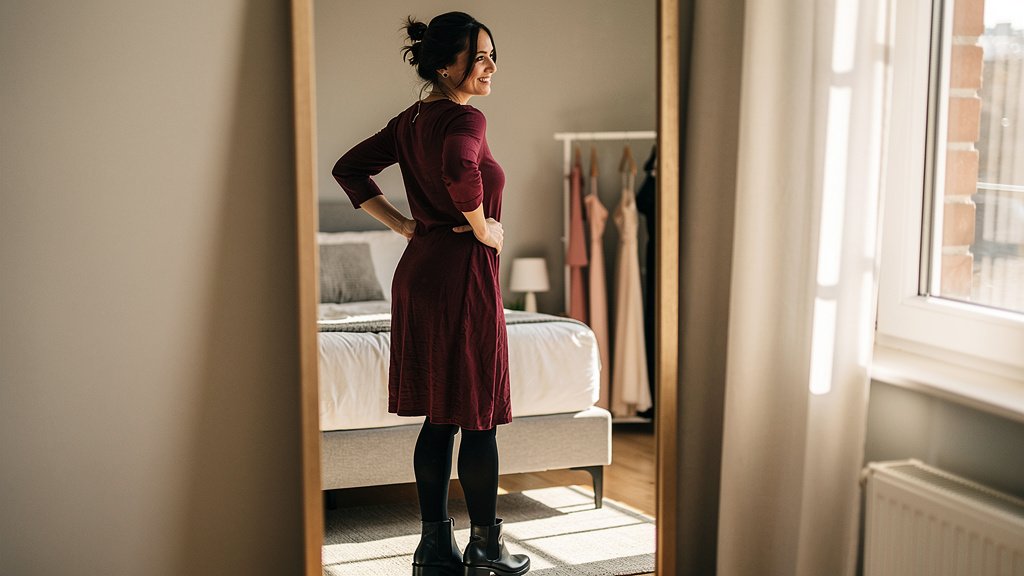
Navy tights can substitute for black with navy or jewel-toned dresses, creating a more cohesive look than the contrast of black tights with a non-black dress. Burgundy and forest green tights work similarly with fall palettes. The risk with colored hosiery is looking costumey or dated these trends cycle in and out, and what reads as fashion-forward one season can look like a 2012 Pinterest board the next.
I couldn't find reliable data on what percentage of hosiery sales are black versus nude versus colored the market research reports I reviewed break down by product type (tights, stockings, pantyhose) rather than color. That's a gap in the available information, though anecdotally, black and nude dominate retail floor space by a wide margin.
The Age Factor Nobody Wants to Discuss
Fashion advice often dances around the reality that age affects hosiery decisions. The Dressing Well guide is unusually direct: women "on the flip side of 40" may find that bare legs don't work as well as they once did. This isn't about arbitrary rules it's about the practical reality that leg skin changes over time, and stockings can provide coverage that some women prefer.
The flip side is equally true: younger women in conservative settings sometimes wear stockings to appear more polished or mature. A 24-year-old interviewing at a traditional firm might choose nude pantyhose to signal professionalism, even though her peers would go bare-legged to a similar event in a different industry.
None of this means women over 40 must wear stockings or women under 30 shouldn't. It means the calculation is personal, and pretending age doesn't factor into it serves no one.
Making the Call
The decision of when to wear stockings with a dress ultimately comes down to a handful of questions: Does the dress code expect or benefit from hosiery? Will stockings add warmth you actually need? Do your shoes work with hosiery? Does your leg coverage preference lean toward bare or covered? None of these questions have universal answers, which is why the old "always wear pantyhose" rule failed it tried to impose uniformity on a genuinely variable decision.
The hosiery industry continues to grow, suggesting that stockings haven't become obsolete even as bare legs have become acceptable in most settings. What's changed is that hosiery has shifted from mandatory to optional, from rule to tool. That's a better place to be. You can wear stockings with a dress when they serve your outfit, your comfort, or your preference and skip them when they don't.