How to Remove Nail Polish Without Nail Polish Remover: 8 Methods That Actually Work

How to Remove Nail Polish Without Nail Polish Remover: 8 Methods That Actually Work
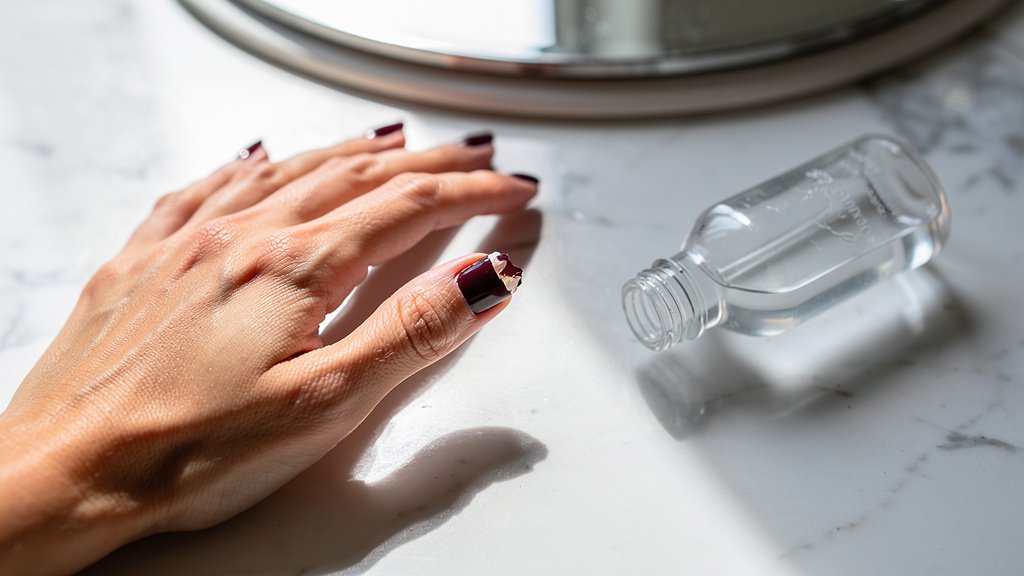
You're already dressed, already running late, and the chip on your index finger has crossed from "lived-in" to "genuinely distracting." The acetone bottle is empty. So now what?
Removing nail polish without a dedicated remover is entirely possible the catch is that most household alternatives require more patience, a lighter touch, and occasionally a second pass. None of them are magic, but several work well enough that a missing bottle of remover won't derail your plans.
Why Standard Remover Works So Well (and Why Alternatives Are Slower)
Acetone dissolves the polymer film in nail polish almost instantly by breaking down the resins and plasticizers that give polish its hard, glossy finish. Brittney Boyce, a celebrity nail artist and founder of NAILSOFLA, put it plainly: "Acetone is very drying and harsh. But the removers work really quickly." Non-acetone commercial removers which typically use ethyl acetate or isopropyl alcohol as their active ingredients are gentler but need more contact time to do the same job.
Every household alternative you'll read about below works on a similar chemical principle: you're looking for a solvent that can soften or dissolve the polish film enough to wipe or peel it away. The difference is concentration. A bottle of acetone remover is purpose-built for this one task. A bottle of hand sanitizer is not, which is why it takes longer and sometimes takes two or three attempts on darker or glitter polishes.
One thing that helps regardless of which method you choose: soak your nails in warm water for five to ten minutes first. According to Christine Koehler, founder and CEO of Flora 1761, water softens the polish and makes it more receptive to whatever solvent you apply next. It's a small step that meaningfully reduces the scrubbing required.
Rubbing Alcohol and Hand Sanitizer
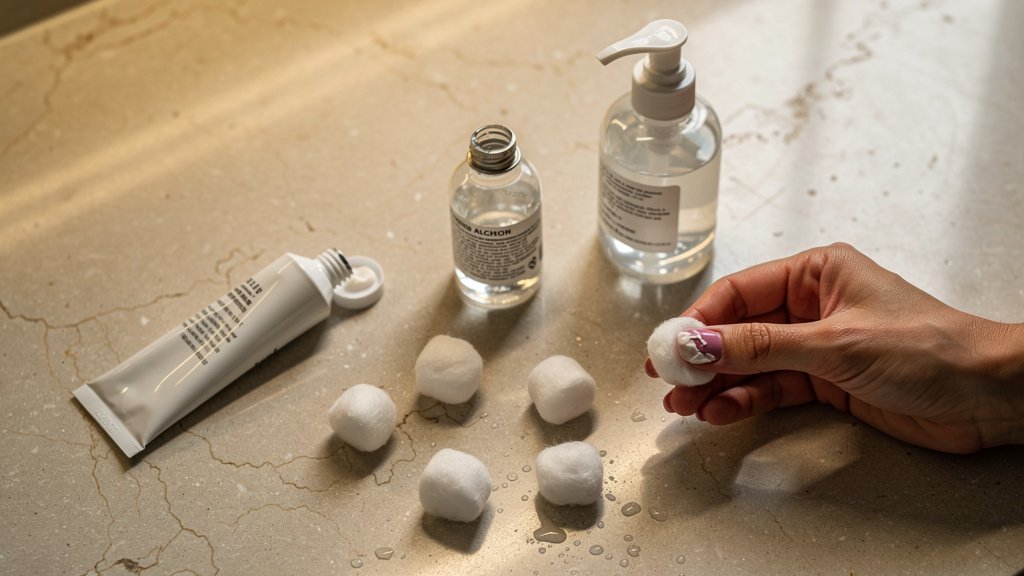
These are the most reliable alternatives, and the ones most dermatologists and nail professionals tend to recommend when acetone isn't available. Isopropyl alcohol at 70% concentration or higher will dissolve most standard nail polishes with sustained contact soak a cotton ball, press it firmly against the nail for 30 to 60 seconds, then wipe in one direction rather than scrubbing back and forth. The single-direction wipe prevents you from smearing softened polish into the surrounding cuticle area.
Hand sanitizer works on the same principle because most gel-based sanitizers contain 60–70% ethyl or isopropyl alcohol. It's slightly less efficient than straight rubbing alcohol because the gel carrier slows evaporation and dilutes contact, but it's effective enough for light to medium coats. Apply a generous amount, let it sit for a full minute, then wipe. Glitter polishes will likely need two rounds.
Healthline notes that alcohol spirits vodka, gin, grappa also fall into this category, though their alcohol concentration (typically 40%) is lower than rubbing alcohol, so they're slower and less consistent. Worth trying if that's what's available, but temper expectations accordingly.
Toothpaste: The Surprising One That Has a Real Chemical Explanation
White toothpaste contains ethyl acetate, the same solvent used in many non-acetone commercial nail polish removers. That's not a folk remedy coincidence it's why this method actually has some logic behind it, even if the concentration is low compared to a dedicated product.
Apply a small amount of plain white toothpaste to the nail (gel formulas and whitening pastes with microbeads work less well), then use a cotton ball or an old toothbrush to work it into the polish using small circular motions. The mild abrasives in toothpaste help physically break up the polish film while the ethyl acetate does the chemical work. For thicker coats, sprinkling a pinch of baking soda onto the toothpaste before scrubbing adds extra abrasive action. Rinse thoroughly afterward, because toothpaste residue left around the cuticles can dry out the surrounding skin.
I'd put this method solidly in the "works but takes effort" category. It's better than nothing for a standard creme polish, but if you're dealing with a dark gel or a chunky glitter, you'll be scrubbing for a while and probably not getting a clean finish.
Vinegar and Citrus
White vinegar alone is a weak acid, and acids can break down some of the compounds in nail polish but not very efficiently on their own. The combination that shows up most consistently across beauty sources pairs equal parts white vinegar with fresh orange or lemon juice, which adds a mild citric acid component and, more practically, a bit of natural oil that helps lift the softened polish off the nail plate without dragging.
Mix equal amounts in a small bowl, soak a cotton pad in the solution, and press it against each nail for 10 to 15 seconds before wiping. The wiping motion matters: press first, hold, then pull toward the tip of the nail rather than scrubbing side to side. Expect to repeat this two or three times per nail for anything beyond a single thin coat.
What vinegar won't do is touch gel polish. The acid concentration simply isn't strong enough to penetrate a cured gel layer, and the method has no documented effectiveness against it. For regular lacquer on healthy nails, it's a reasonable option if alcohol isn't available just don't expect the same speed you'd get from isopropyl.
Hairspray and Perfume
Both work because they contain alcohol hairspray typically uses denatured alcohol as a carrier for its polymers, and most perfumes and body sprays are 70–90% ethanol. Spray directly onto a cotton ball (not straight onto the nail, which wastes product and creates fumes) and use the same press-hold-wipe technique. The alcohol content in perfume is actually high enough to be reasonably effective on light polishes, though the fragrance compounds can leave a slight residue that you'll want to rinse off.
Hairspray is the less elegant option. It works, but the polymer residue it leaves on the nail surface means you'll need to wash your hands thoroughly afterward, and the stickiness can make it harder to tell whether you've actually removed all the polish or just coated it in hairspray film.
Hydrogen Peroxide and Warm Water
A soak in a mixture of two parts warm water to one part hydrogen peroxide (standard 3% drugstore concentration) can soften standard nail polish enough to peel or file it away. This takes longer than alcohol-based methods plan on soaking for at least ten minutes and works best on polish that's already a few days old and starting to lift at the edges. Fresh, fully adhered polish is harder to shift this way.
The advantage is that hydrogen peroxide at 3% is gentle enough that it won't irritate the skin around the nail the way acetone can. The disadvantage is that it genuinely does take time, and for anything darker than a nude or blush shade, you'll likely need to follow up with a file or a second soak.
Reapplying Fresh Polish and Immediately Removing It
This one sounds counterintuitive, but it works on a straightforward principle: fresh, wet nail polish acts as a solvent for the dry polish underneath it, briefly reactivating the resins. Apply a new coat directly over the old polish, and while it's still wet within the first 10 to 15 seconds wipe the entire nail with a dry cotton pad or tissue in one clean stroke.
The technique works best on thin, single coats of standard lacquer. It's genuinely useful for cleaning up edges and small mistakes rather than a full removal, and it's essentially useless on gel polish or anything that's been on for more than a few days and has fully cured and hardened. But for a fresh chip or a smear you want to correct before it dries, it's the fastest option available.
Filing and Peeling: When to Use Mechanical Removal
A nail file can remove polish through friction, though it's slow and risks thinning the nail plate if you're not careful. Use a fine-grit file (180 to 240 grit) and work in one direction never saw back and forth keeping light pressure. This is most practical for a single nail that needs cleanup rather than a full ten-finger removal session. The bigger risk is over-filing: once you've gone through the polish layer, it's easy to keep going without realizing it, especially on thinner nails.
Peeling is only advisable if the polish is already lifting naturally at the edges, and even then, only if you're peeling in the direction of nail growth (from cuticle toward tip) rather than sideways, which can pull layers of the nail plate along with the polish and cause surface damage that takes weeks to grow out.
What Doesn't Work as Well as the Internet Claims
Warm water alone, without any solvent or acid component, won't remove nail polish it softens it slightly, which is why it's useful as a pre-soak before other methods, but water by itself isn't a solvent for the polymer resins in lacquer. The same applies to plain dish soap, which shows up in some DIY guides but doesn't have the chemical properties needed to break down nail polish on its own.
Reliable data on how well these methods work on gel polish specifically is scarce, and that gap matters. Everything above is tested and documented for standard lacquer. Gel polish is UV-cured and forms a much more durable cross-linked polymer structure than regular nail polish, and the general consensus from nail professionals is that acetone soaking is the only genuinely effective at-home removal method for gel. Claims that hydrogen peroxide or cuticle oil can help exist, but the evidence is thin and results appear highly variable depending on the specific gel formula used. Attempting aggressive mechanical removal on gel polish filing, picking, peeling is where most of the nail damage stories come from, and household alternatives simply have real limits here.
Protecting Your Nails During Any Alternative Removal
The reason acetone gets a bad reputation isn't really the removal itself it's the dryness it leaves behind. Prolonged exposure strips the natural oils from the nail plate and the surrounding skin, which is why nails feel brittle and cuticles crack after heavy acetone use. The household alternatives discussed here are generally less aggressive in this respect, but rubbing alcohol still has a drying effect, and any method that involves scrubbing can cause minor surface abrasion.
Apply cuticle oil or a rich hand cream immediately after any removal process, regardless of the method. If your nails feel rough or look dull after removal, a nail buffer used gently in one direction can restore some surface smoothness though if the dullness comes from actual nail plate thinning rather than surface residue, buffing will make it worse, so assess first. And if you're regularly removing polish at home without access to proper remover, it's worth keeping a bottle of cuticle oil nearby as a standard part of the process rather than an afterthought.
None of these methods are as clean or as fast as a proper acetone or non-acetone remover that's the core limitation, and no household substitute changes it. In a pinch, though which is the actual scenario most people asking this question are in rubbing alcohol, hand sanitizer, or toothpaste will get the job done well enough to get on with your day, and that's all you need them to do.